The Warsh Fed talks less — good for investors
At his first meeting, Kevin Warsh cut the Fed statement by more than half, refused to plot his own rate forecast, and launched five reform task forces. The reduced guidance is not a bug — it is the whole strategy.
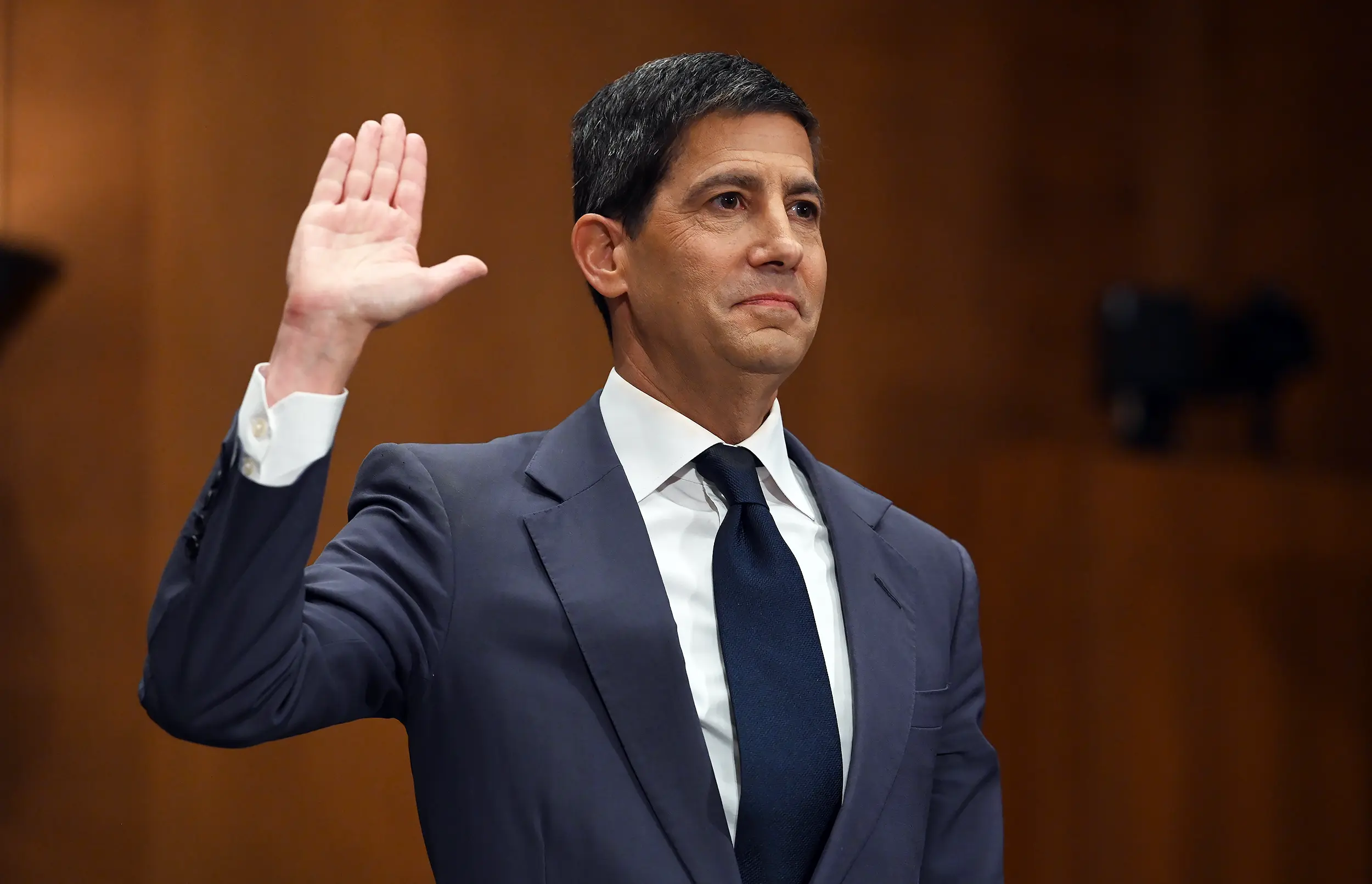
The Federal Reserve just entered its biggest cultural shift in a generation, and the most important thing about it is what was missing. At his first meeting as chair on June 17, 2026, Kevin Warsh held interest rates steady, slashed the policy statement by more than half, and quietly removed forward guidance — the practice of telegraphing where rates are headed — from the Fed's communication toolkit. He also declined to submit his own forecast to the famous dot plot, a small act with a large message: the most influential person at the table refused to tell markets what he thinks comes next. For investors trained to dissect every Fed signal, that absence feels like a loss of information. It is closer to the opposite.
This is not a story about a rate decision. The hold at 3.50%-3.75% was priced in weeks ahead and surprised no one — the same market-efficiency logic that means the economic winners of an NBA Finals are largely decided before tip-off, with the outcome reallocating far less money than the headlines imply. The story is a deliberate downgrade of the Fed's role as a forecaster — and a wager that markets and the economy are healthier when the central bank says less and the price system says more.
What actually happened in June
The mechanics of the meeting were unremarkable; the framing around them was not. The June statement ran roughly 130 words, down from 341 at the April meeting, and it dropped the language that had hinted at future easing. Warsh described it plainly in his press conference: a bit shorter, a bit simpler, dispensing with older language, giving the facts as best the committee can judge them. The federal funds rate stayed where it has been since late 2025, on a unanimous 12-0 vote.
The genuine break came in the projections. Warsh did not plot a dot for himself, telling reporters, "I did not submit a dot for me," and adding that it is not helpful in the conduct of policy. He let his colleagues submit theirs, and the picture they drew was hawkish: nine of the eighteen participating members saw at least one rate increase before the end of 2026, and the median projected year-end rate rose to 3.8% from 3.4% in March. Inflation projections moved up in step, with the committee's preferred gauge now seen near 3.6% at year-end against a 2.7% estimate just three months earlier — a backdrop shaped largely by the oil shock from the war in Iran.
The end of forward guidance
For fifteen years, the Fed has leaned ever harder on telling markets what it intends to do. The theory was that clear signposting reduces uncertainty and smooths the transmission of policy. The practical effect was a market that increasingly traded the Fed's words rather than the economy's data, and that lurched violently whenever reality diverged from the script.
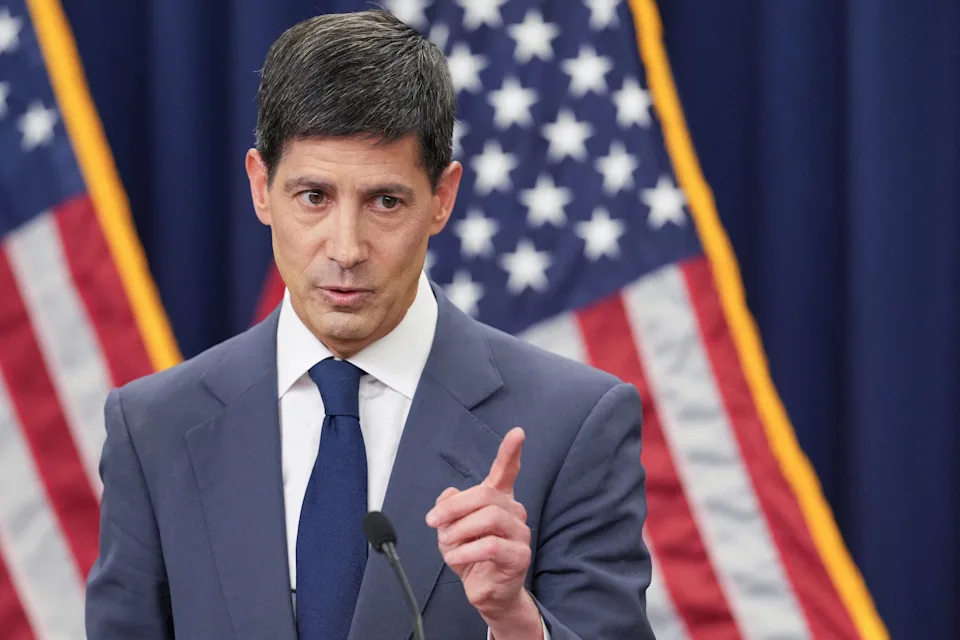
Warsh's objection is structural, not stylistic. "As a general proposition, forward guidance isn't the business we should be in," he told the room, framing it as a question of what a central bank is actually competent to do. There is an important distinction buried here between information and false precision: a forecast delivered with confidence the forecaster does not possess is not information at all. By withholding the easing bias and his own rate projection, Warsh is refusing to manufacture certainty the Fed cannot honestly supply. You can read the full exchange in the press conference transcript, which is worth the time precisely because so little of it is scripted.
Why false precision was the real problem
The dot plot is the purest expression of the habit Warsh is trying to break. The Summary of Economic Projections asks policymakers to mark where they expect interest rates to sit years out, and those marks are then parsed by hedge funds, banks, and financial media as if they were a schedule rather than a guess. The trouble is that the forecasts are routinely wrong, because economies are not predictable on that horizon — inflation surprises, shocks arrive, and conditions that looked fixed reprice overnight.
Warsh made the point with a dealer's wit, noting that the dot submissions arrived in pencil, the kind with big erasers. The joke lands because it is true: the plot encodes a confidence the committee does not actually hold, and markets then build positions on top of that borrowed confidence. When the dots inevitably move, the repricing is blamed on the Fed changing course, when the deeper fault was treating a forecast as a commitment in the first place. Removing the chair's own dot does not fix the tool, but it visibly devalues it — every conversation about the rate path now carries the caveat that the most important voice declined to participate.
The five task forces are the real agenda
The rate hold was theater; the reform plan is the substance. Warsh used the bulk of his prepared remarks to announce five task forces that will reassess the core machinery of the institution: its communications, its balance sheet, the data it relies on, productivity and jobs in an era of AI transformation, and its inflation framework. He said he hopes most will report by the fall or year-end, and that the inflation review will examine the drivers and measurement of inflation without reconsidering the 2% target for now.
This is a shrewd use of limited authority. A Fed chair's power is largely delegated by the Board and the wider committee, and Warsh cannot simply decree a new operating style. The task forces are a mechanism to bring the other members around to his thinking with help from outside experts he selects — a way to manufacture consensus rather than impose it. The balance sheet review matters most for markets: at roughly $6.7 trillion, the Fed's holdings are something Warsh has long argued should shrink, though the June statement kept the "ample reserves" framework with no immediate reduction.
A return to the Greenspan posture
The comparison writes itself, and Warsh invited it. He was sworn in at the White House — the first chair to take the oath there since Alan Greenspan in 1987 — and he name-checked Greenspan in his remarks. Greenspan was famous for offering markets limited guidance and a degree of strategic ambiguity, trusting participants to interpret conditions themselves rather than spoon-feeding them a path.
No modern chair can fully recreate that era, and Warsh is not trying to. What he appears to want is a restoration of humility about what the Fed can credibly forecast, paired with a sharper, almost singular focus on inflation. Warsh has long argued that inflation is fundamentally a policy choice rather than an external condition the Fed merely reacts to. That conviction is the engine behind the reduced guidance: a chair who believes price stability is a matter of will, not luck, has less use for the elaborate forecasting apparatus his predecessors built.
What it means for investors
The instinct to equate less guidance with more risk is understandable and mostly wrong. A Fed that forecasts less is not hiding information; it is declining to provide a crutch that was never load-bearing. For the long-term investing decision, the practical implications are almost reassuringly dull, because the right strategy barely changes.
Focus on business fundamentals — revenue, margins, competitive position, cash flow — which drive returns over any horizon that matters more than central-bank choreography ever did, a discipline explored further in how interest rates quietly rewire every investment decision. Extend your time horizon, since short-term policy speculation is a poor foundation for durable wealth. Diversify across scenarios rather than concentrating a portfolio around a single predicted rate path, because no chair, Warsh included, can reliably foresee the next two years. The deeper benefit is to market efficiency: when participants spend less energy parsing Fed language and more on pricing real risk, capital allocation tends to improve, even if the transition is bumpier.
The risk Warsh is running
None of this is costless, and the honest case against it is not trivial. The most immediate evidence came from the bond market itself: the two-year Treasury yield jumped 16 basis points after the statement, a large one-day move that suggests investors read the new regime as more likely to end in hikes — and that a guidance-light Fed may simply be a more volatile one to trade around. Removing the signposts does not eliminate uncertainty; it relocates it from Fed press releases into market prices, which can move fast and overshoot.
There is also the politics. Warsh is a Trump nominee who secured the job amid an extraordinary White House pressure campaign for lower rates, and he takes over with his predecessor still seated at the table. Any dovish turn will be scrutinized as capitulation, and any hawkish hold as defiance, which puts the question of Fed independence under a brighter light than usual. Finally, the task-force strategy depends on persuasion: the Fed's governors hold 14-year terms and its regional presidents speak their own minds, and if they conclude Warsh is overweighting an AI-driven disinflation story while underweighting the oil-price shock, they can simply outvote him. The quieter Fed is a genuine bet, and it has not yet paid out.
The Bottom Line
Kevin Warsh is making a wager that the modern Fed confused communication with clarity, and that stripping out forward guidance, the chair's dot, and a third of the statement will leave markets healthier rather than blinder. He may be wrong, and the early Treasury move is a reminder that less guidance can mean more volatility before it means more discipline. But the premise is sound: a central bank's job is price stability and confidence in the system, not the elimination of uncertainty from markets that exist to price it. For investors, the takeaway is not to brace for a more dangerous Fed — it is to stop outsourcing judgment to one. Less guidance does not mean less clarity. Sometimes it just means fewer illusions.
Explore Related Concepts
Frequently Asked Questions
Who is the current Federal Reserve chair?
Kevin Warsh is the 17th chair of the Federal Reserve. The Senate confirmed him on May 13, 2026, in a 54-45 vote — the narrowest in history — and he was sworn in on May 22, succeeding Jerome Powell, who remains on the Board of Governors as a voting member.
What is forward guidance and why did Warsh drop it?
Forward guidance is the practice of signaling the likely future path of interest rates to shape market expectations. Warsh removed it from the June statement, arguing that as a general matter it is not a business the Fed should be in, and that markets function better when prices reflect data rather than Fed language.
What is the Fed dot plot?
The dot plot is part of the Summary of Economic Projections, where each policymaker anonymously marks where they expect interest rates to be in coming years. At the June 2026 meeting, Warsh notably declined to submit his own projection, saying it was not helpful to policy.
What did the Fed decide at the June 2026 meeting?
The FOMC voted unanimously to hold the federal funds rate at 3.50%-3.75%, where it has sat since late 2025. The projections showed nine of eighteen submitting members expecting at least one rate hike before the end of 2026, with the median 2026 rate revised up to 3.8% from 3.4% in March.
Is less Fed guidance bad for investors?
Not necessarily. In the short term, fewer signals can mean more volatility, as the 16-basis-point jump in the two-year Treasury yield after the June statement showed. Over time, many economists argue that prices reflecting fundamentals rather than anticipated policy lead to better capital allocation.
How should long-term investors respond to the Warsh Fed?
The core discipline does not change: focus on business fundamentals, extend your time horizon, and diversify across scenarios rather than betting a portfolio on a predicted policy path. A Fed that forecasts less simply removes a crutch that was never very reliable.