CAPITAL ALLOCATION
The discipline of deciding where and how to deploy financial resources — the oldest question in business, newly urgent in the AI cycle.
Part of: EconomicsCapital allocation is the process of deciding how to deploy finite financial resources across competing opportunities, and getting it right is how companies and investors compound durable advantages over time.
Why capital allocation is the defining challenge of the AI era
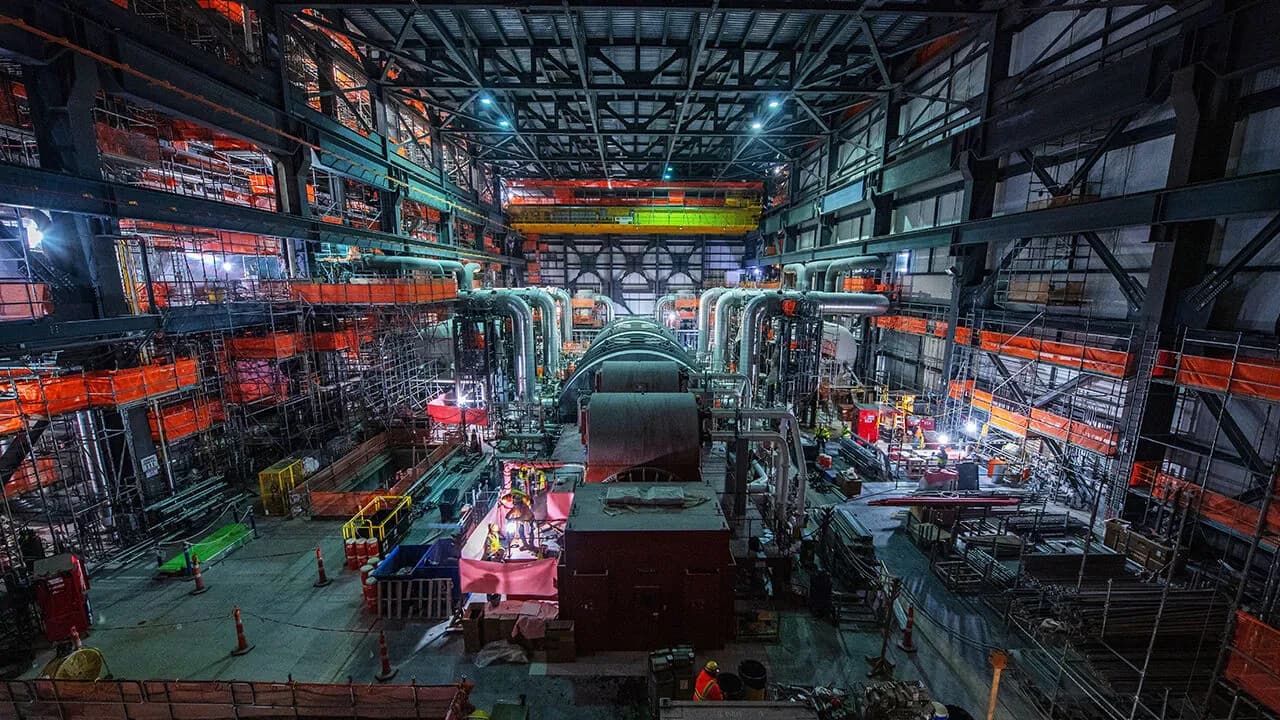
Every major technology cycle creates a capital allocation problem, but AI compute infrastructure is unusual in its scale and irreversibility. A data center represents a billion-dollar commitment that takes 18–36 months to build, another 12–24 months before it generates revenue, and exists on a 15–20 year depreciation schedule. The decision to commit that capital is made based on demand forecasts that are structurally uncertain — because AI demand is itself a function of model capabilities that don't yet exist.
The companies getting these decisions right will compound durable advantages. Those getting them wrong face write-downs, stranded assets, and competitive disadvantage that compounds in the opposite direction.
The three allocation decisions that matter
Capital allocation in AI reduces to three nested choices. The first is whether to be a compute provider, a model developer, or an application builder — each carries different capital requirements, different risk profiles, and different return characteristics. Compute providers (data centers, chip manufacturers) face the highest capital intensity and the longest payback periods. Application builders face the lowest capital intensity but the most competitive pressure.
The second is how to sequence investment. Early movers in infrastructure benefit from secured energy capacity, established supply chain relationships, and accumulated operational experience. Late movers face higher costs and longer lead times but can observe which bets actually paid off. Neither strategy dominates unconditionally — the right choice depends on a company's cost of capital, competitive position, and risk tolerance.
The third is how to think about optionality. Infrastructure investments that are modular and upgradeable preserve more optionality than investments that lock in a specific architecture. The rapid pace of AI hardware evolution — from H100s to B200s to whatever comes next — makes optionality particularly valuable.
Mistakes common in current AI capital allocation
The most common error is confusing demand for compute with demand for specific compute configurations. Not all GPU clusters are fungible. A data center optimized for training large frontier models may be poorly suited for inference at scale, which has different latency, throughput, and memory bandwidth requirements. Companies that over-index on one configuration face costly retrofits as the mix of training vs. inference demand shifts.
A second common error is underestimating energy economics as a binding constraint. Capital allocation plans that assume power availability on legacy grid timelines are routinely surprised by 3–7 year interconnection queues. The companies that locked in energy capacity early — even at above-market rates — now hold an asset that is genuinely scarce.
The investor's version of the same problem
For investors — and especially venture capital allocators — capital allocation in AI means deciding how much of a portfolio to expose to each layer of the stack, at what valuations, and on what timeline. The infrastructure layer has historically been the most capital-intensive and the most cyclical. The application layer is the most accessible but faces the most uncertain competitive dynamics as model capabilities evolve. The model layer sits between them — massive capital requirements, winner-take-most dynamics, and extraordinary uncertainty about which capabilities will be commoditized vs. defended.
The disciplined allocator is not the one who avoids all of these bets — it is the one who sizes them appropriately relative to the genuine uncertainty at each layer.
Open Questions
Several questions remain genuinely unresolved and will shape how capital allocation thinking evolves over the next decade:
Will inference demand dwarf training demand, and when? Most current infrastructure is skewed toward training workloads. If inference becomes the dominant compute use case — as some projections suggest — the optimal configuration of capital shifts significantly toward lower-latency, higher-throughput setups. The timing and magnitude of this shift is still contested.
How much of the current buildout is ahead of demand? Historical infrastructure cycles (fiber in the late 1990s, cloud in the 2010s) suggest that overbuilding is common in the early phase and that the excess capacity often becomes a gift to the next wave of application builders at depressed prices. Whether AI infrastructure follows the same pattern depends on demand growth rates that remain genuinely uncertain.
Does energy scarcity become a permanent moat? If grid interconnection queues remain 5–7 years long in most markets, secured energy capacity could function as a durable competitive advantage rather than a temporary one. But regulatory pressure, new transmission investment, and distributed generation could erode that scarcity faster than incumbents expect.
What is the right unit of analysis for returns? Traditional infrastructure returns are measured at the asset level — cost per megawatt, revenue per rack. AI infrastructure complicates this because the value created often accrues elsewhere in the stack. Hyperscalers building internal clusters may accept infrastructure returns that would be unacceptable on a standalone basis because the returns show up as margin in their model or application businesses.
How does geopolitical fragmentation change the calculus? Export controls on advanced chips, data localization requirements, and allied-nation compute clusters are already forcing capital allocation decisions to embed geopolitical assumptions. The cost of that fragmentation — in duplicated infrastructure, stranded capacity, and higher unit economics — is not yet well understood.
Part of the knowledge graph at The Best Blog Ever — reference definitions for ideas that matter.