Everything Apple Announced at Its Fall iPhone Event
A foldable iPhone, a Watch that scores your day, AirPods that cancel more noise than ever, and a Siri that finally understands what is on your screen. Apple did not just launch new hardware — it previewed what it wants an intelligent personal system to look like.
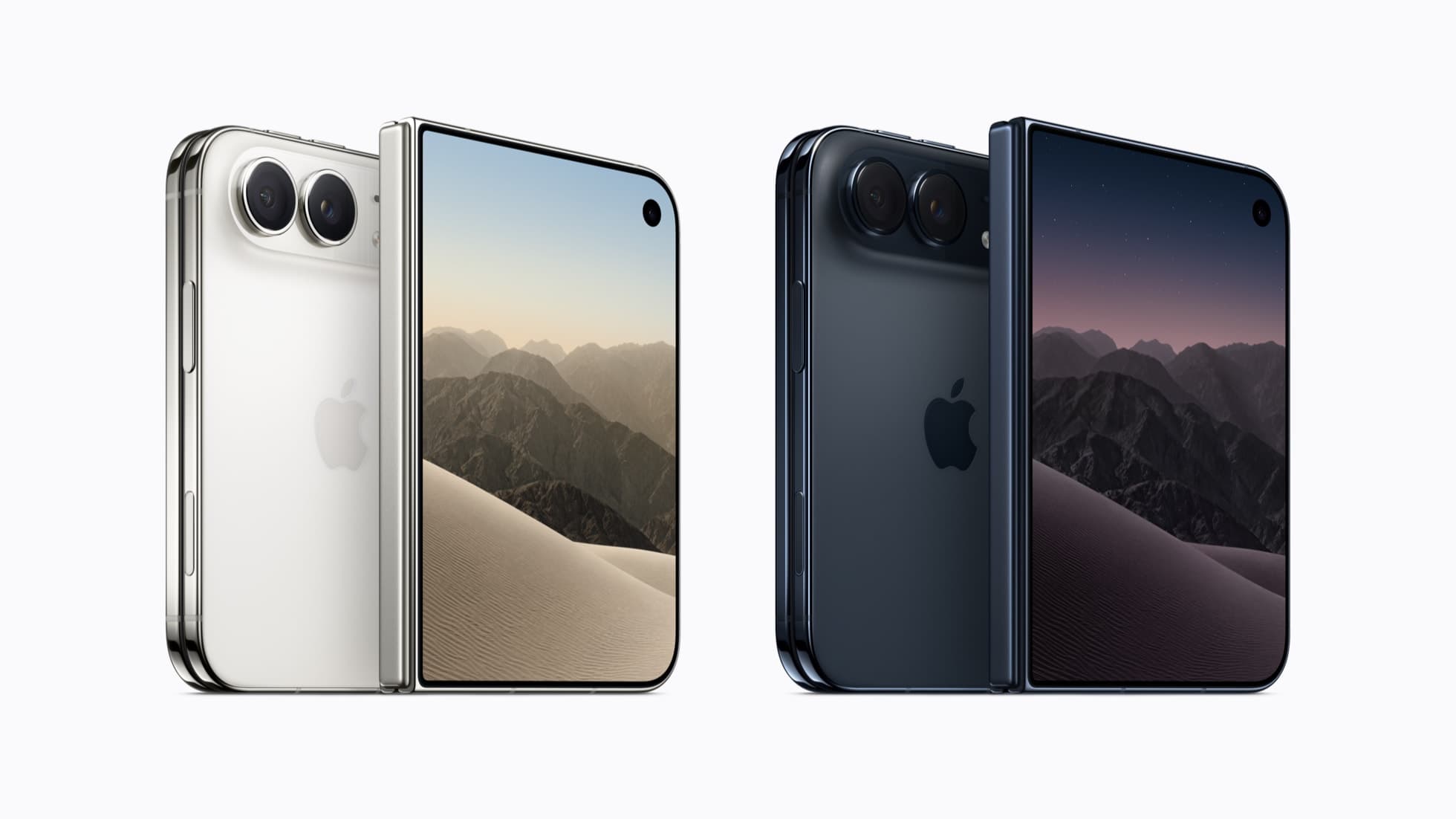
Apple's September event was supposed to be another iPhone launch.
Instead, it became something more significant: the beginning of a new chapter for Apple's hardware strategy.
The company introduced its first foldable iPhone, a new generation of Pro iPhones, redesigned Apple Watches with substantially more intelligent health and audio capabilities, and a new generation of AirPods that brings active noise cancellation and AI-powered translation further down Apple's product lineup.
And underneath all of it was the same idea: Apple wants its devices to become increasingly aware of the person using them and the world around them.
That makes this event about more than new hardware. It is about Apple's attempt to turn the entire ecosystem — from the phone in your pocket to the watch on your wrist and the headphones in your ears — into an intelligent personal system.
Here is everything Apple announced.
AI Overview
Apple's fall 2026 event introduced the iPhone Duo, Apple's first foldable iPhone ($1,999, 7.6-inch inner display), alongside the iPhone 18 Pro and Pro Max with a variable-aperture 48MP camera. Software-side, Siri AI (iOS 27 beta) reads on-screen context to take actions. The Apple Watch Series 12 and Ultra 4 add a Health Sensing System and daily Readiness score, and AirPods 5 bring active noise cancellation to Apple's open-ear design for the first time, starting at $129.
The Ambient Computing Framework
Every product at this event shares one design goal: reduce how much a user has to explicitly tell their devices. The iPhone sees what's on screen, the Watch senses vitals and surroundings, the AirPods hear conversations and ambient sound, and Siri AI stitches the signals into action. Call it Apple's Ambient Computing Framework — the bet that the next competitive axis in consumer hardware is not raw model size but how much of a person's context a device can absorb without being asked. For more on the model layer underneath this shift, see our explainer on artificial intelligence and how agentic systems decide what action to take next.
The iPhone Duo finally makes Apple's foldable strategy real
The biggest announcement was also the one Apple had never done before.
Apple introduced iPhone Duo, its first foldable iPhone.
The device opens like a book, revealing a 7.6-inch inner Super Retina XDR display. Closed, it uses a 5.4-inch outer display that Apple says provides 90 percent of the screen area of the iPhone 18 Pro.
Both displays use the same aspect ratio, allowing content to transition between the closed and open states without forcing users into a completely different interface. The inner display also features ProMotion, Always-On functionality, and up to 3,000 nits of outdoor brightness.
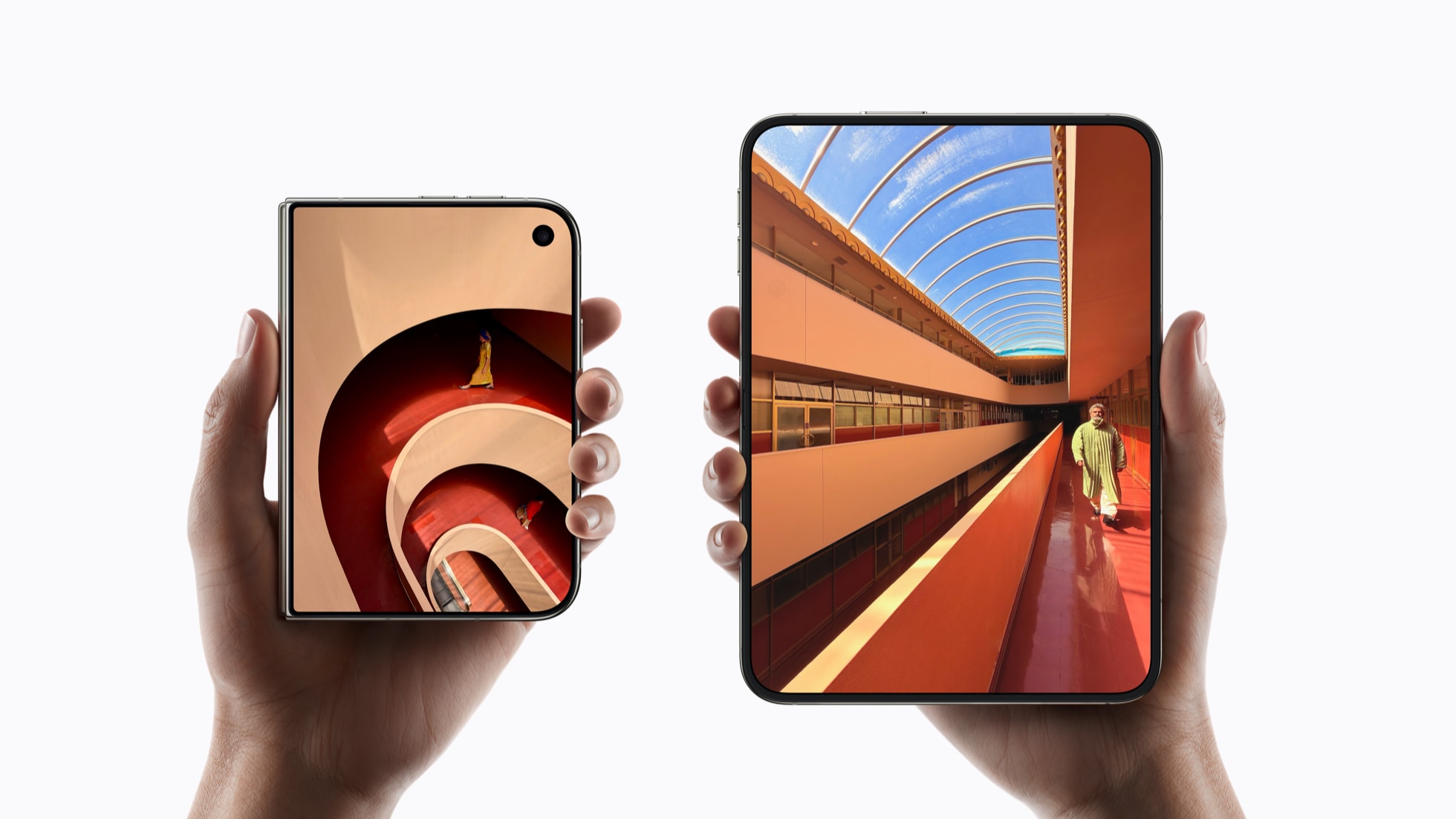
Apple is clearly trying to avoid making the Duo feel like a phone with a novelty hinge.
The company's pitch is closer to this: What if your iPhone could become a small tablet whenever you needed one?
The 7.6-inch display gives users considerably more room for multitasking, gaming, reading, and working. Apple is also bringing Apple Pencil support to the Duo later this year, allowing users to take notes, sketch, and annotate documents on either display.
The hardware is equally ambitious. The Duo uses Apple's A20 Pro chip, a custom thermal-management system, a vapor chamber, and a dual-battery architecture. Its frame is made from grade 5 titanium, while Apple has engineered a precision hinge with more than 100 components. Apple also claims an IP68 rating for water and dust resistance.
The company is clearly betting that the traditional weaknesses of foldables — durability, awkward software, and a compromised closed-screen experience — can be solved by controlling both the hardware and software.
The starting price reflects that ambition. iPhone Duo starts at $1,999 in the United States, with storage configurations extending to 2TB. Preorders begin October 16, with availability beginning October 23.
This is not Apple's attempt to make foldables mainstream overnight. It is Apple's attempt to define what an Apple foldable should be.
The iPhone 18 Pro gets a much more serious camera
Alongside the Duo, Apple introduced the iPhone 18 Pro and iPhone 18 Pro Max.
The headline camera change is a new 48-megapixel Fusion Main camera with variable aperture.
That matters because aperture is one of the fundamental controls of photography. Instead of relying entirely on computational photography to determine how an image should look, the new system gives users more physical control over how much light enters the camera and how the image is captured. Apple is also adding new Pro controls to the Camera app.
The result is a more deliberately photographic iPhone rather than simply another generation of computational improvements.
The iPhone 18 Pro models also receive:
- A20 Pro
- a next-generation vapor chamber
- a smaller Dynamic Island
- improved battery performance
- enhanced video capabilities
- new Photographic Styles and camera controls
- Apple Intelligence and Siri AI
The Pro Max gets the biggest battery-life improvement Apple has ever delivered on an iPhone, according to Apple.
The new models come in black, silver, glacier, and a new burgundy finish. Preorders begin September 12, with availability starting September 18.
In other words, Apple has split the iPhone strategy into two very different ideas: the Duo is the new form factor. The 18 Pro is the refinement of the form factor Apple already knows works.
Siri finally gets the AI makeover Apple has been promising
Hardware was only half the story. Apple also pushed much harder into its AI strategy.
The company's new Siri AI is rolling out in beta with iOS 27 and is designed to understand personal context, see what is on the user's screen, and take actions based on that information.
That is a major conceptual shift from the Siri people have known for years. Instead of simply asking "What's the weather?", the goal is for Siri to understand what the user is doing, what information is relevant, and what action should happen next.
Apple says Siri AI can work with personal context across messages, emails, photos, and other information, while also using onscreen awareness to act on what the user is currently viewing.
Apple is also emphasizing privacy. Its broader Apple Intelligence strategy relies heavily on on-device processing, with Private Cloud Compute handling tasks that require additional computing power while maintaining Apple's privacy model.
This is important because Apple's AI pitch is becoming increasingly different from the standard chatbot pitch. Apple does not primarily want your phone to become a chatbot. It wants the operating system to become intelligent.
Apple Watch Series 12 becomes much more aware of the person wearing it
The Apple Watch Series 12 received one of the more interesting upgrades of the entire event.
Apple introduced a new Health Sensing System, powered by the S11 chip, designed to provide higher-frequency heart-rate and heart-rate-variability measurements.
Those measurements feed into a new Readiness experience. Instead of simply showing users raw health statistics, the Watch attempts to interpret them.
Readiness combines factors including recent activity, training load, vital signs, and sleep to produce a daily 0–10 score, with recommendations such as:
- Recover
- Pace Yourself
- Ready
- Go For It
The score can change during the day as new information arrives.
This is a subtle but important change in Apple's health strategy. The Watch is moving from "Here is your data" toward "Here is what your data means." Apple is also redesigning the Health app with a new Longevity section and a Health Age feature that compares health metrics with a user's chronological age.
The Apple Watch is getting an AI-powered ear
This is where things become more interesting.
Apple is adding Audio Intelligence features to the new Watch models. The company says these capabilities can help users remember important moments from conversations and stay alert to important sounds.
That makes the Watch less like a passive health tracker and more like a device capable of interpreting the user's environment.
But there is an important distinction. Apple has not simply announced an "always-listening Apple Watch" in the way that phrase might suggest. Instead, Apple describes specific Audio Intelligence capabilities designed around privacy, security, and accessibility. The company says the features are built to help users remember key moments and identify important sounds.
That distinction matters, because once a wearable can understand conversations and environmental sounds, the product stops being merely a sensor. It becomes an observer.
And that raises a much bigger question for the next generation of personal computing: how much of our environment are we willing to let our devices understand?
Apple Watch Ultra 4 gets a major battery upgrade
For Apple's outdoor and sports audience, the Apple Watch Ultra 4 gets a more substantial hardware upgrade.
It uses the same S11 chip and Health Sensing System as the Series 12, along with higher-frequency heart-rate and HRV measurements and the new Readiness feature.
Battery life is one of the biggest changes. Apple says Ultra 4 provides up to 50 hours of everyday battery life, rising to 84 hours in Low Power Mode. For outdoor workouts, Extended Workout mode can provide up to 25 hours, while Max Extended Workout mode can track certain outdoor activities for up to 45 hours with GPS readings every second.
The Ultra 4 starts at $799 in the United States and arrives September 18.
AirPods 5 bring noise cancellation to the cheaper AirPods
Apple also updated the AirPods lineup with AirPods 5.
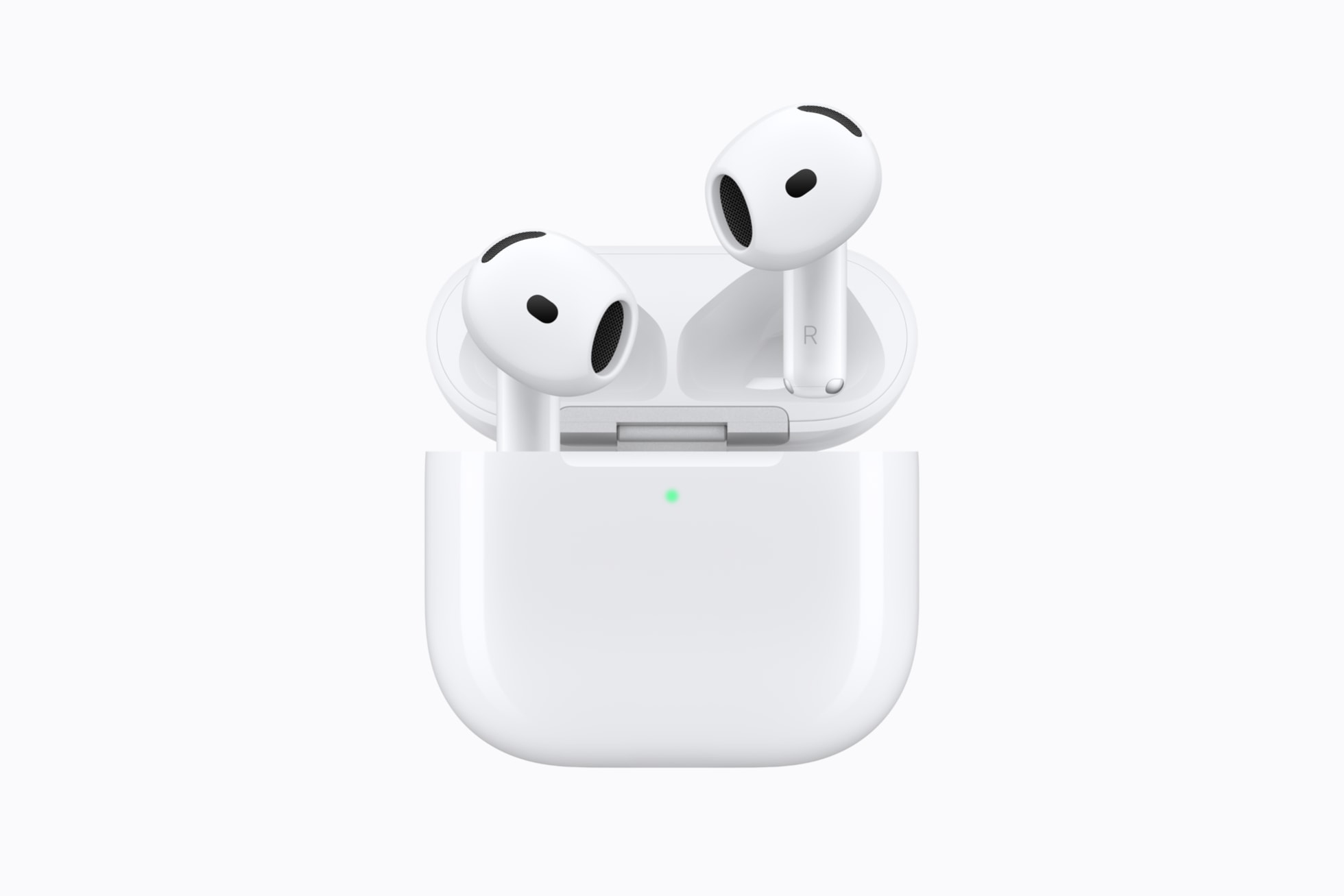
The biggest headline is active noise cancellation in Apple's open-ear design. Apple says the new model can remove up to 50 percent more external noise than AirPods 4 with ANC, while also improving Transparency mode and Adaptive Audio.
AirPods 5 also add:
- improved acoustic architecture
- next-generation Adaptive EQ
- hands-free Siri AI
- Live Translation
- head gestures for responding to Siri
- improved durability
The more expensive version adds a wireless charging case, volume controls directly on the stem, and up to five hours of listening with ANC enabled.
Pricing starts at:
- AirPods 5 — $129
- AirPods 5 with Wireless Charging Case — $149
Both become available September 18.
The interesting part is not simply better headphones. It is that Apple is turning AirPods into another AI interface. You can talk to Siri without reaching for your phone. You can use Live Translation across languages. And the headphones become another point through which Apple's intelligence layer can interact with you.
The real announcement was not the iPhone
The foldable iPhone will get the headlines. It deserves them. Apple has finally entered a category that Samsung, Huawei, Honor, and others have been developing for years.
But the more important story may be happening underneath the individual products. Apple is building a system in which:
- The iPhone sees.
- The Watch senses.
- The AirPods hear.
- Siri understands.
And the operating system connects the pieces.
That is a very different vision of AI from simply putting a chatbot on a phone. Apple's advantage has never been that it invented every individual technology first. It has been its ability to combine technologies into products that feel like one coherent system.
The iPhone Duo is therefore important not merely because it folds. The Apple Watch Series 12 is important not merely because it measures more health data. AirPods 5 are not important merely because they cancel more noise.
Together, they point toward a much larger strategy: Apple wants your devices to understand more of what you are doing without requiring you to constantly tell them.
Why It Matters
That could become the defining battle of the next phase of personal computing. Not who has the smartest chatbot. Not who has the biggest model. But who can build the most useful intelligent layer around a person's actual life.
And after this event, Apple has made it clear that it intends to compete for that position with hardware everywhere.
Limitations
Pricing, ship dates, and specs above are Apple's own announced figures as of the event; real-world battery life, camera performance, and Duo hinge durability won't be independently verifiable until review units ship. Siri AI's on-screen understanding is rolling out in beta with iOS 27 — feature scope commonly narrows between beta and general release. Audio Intelligence's "remember conversations" claim is Apple's framing; exact recording and retention behavior should be confirmed against Apple's full privacy documentation once it publishes.
The Bottom Line
Apple didn't just refresh its lineup — it laid the first foldable brick in a much longer bet: that the next decade of personal computing is won by whichever company's devices understand the most about your life while asking you to do the least. iPhone Duo is the headline. The Ambient Computing Framework underneath it is the story.
Related
- Apple Intelligence: How On-Device AI Actually Works
- Spatial Computing Interfaces: Design Rules and the ASO Playbook
- The Technology hub
References
Key Facts
| Fact | Value |
|---|---|
| Category | Technology / Consumer Hardware |
| Difficulty | Beginner-friendly |
| Reading time | 9 min |
| Search intent | News / Informational |
| Updated | September 10, 2026 |
Explore Related Concepts
Frequently Asked Questions
How much does the Apple iPhone Duo cost and when does it ship?
The iPhone Duo starts at $1,999 in the United States, with configurations up to 2TB of storage. Preorders begin October 16, 2026, with availability starting October 23, 2026.
What is different about the iPhone 18 Pro camera?
The iPhone 18 Pro and Pro Max use a new 48-megapixel Fusion Main camera with variable aperture — a physical mechanism that controls how much light reaches the sensor, giving photographers more direct control instead of relying entirely on computational processing to shape the image.
What can the new Siri AI actually do?
Siri AI, rolling out in beta with iOS 27, can read what is currently on the screen and combine it with personal context from messages, email, and photos to decide what action to take next. Apple processes this primarily on-device, routing heavier tasks to Private Cloud Compute to preserve its privacy model.
What is the Apple Watch Readiness score?
Readiness is a new Apple Watch Series 12 and Ultra 4 feature that combines heart-rate variability, recent activity, training load, vital signs, and sleep into a daily 0-10 score with a recommendation such as Recover, Pace Yourself, or Go For It. It updates through the day as new data arrives, powered by a new Health Sensing System built on the S11 chip.
Do AirPods 5 have noise cancellation?
Yes — for the first time on Apple's open-ear AirPods design. Apple says AirPods 5 remove up to 50% more external noise than AirPods 4 with ANC enabled, alongside improved Transparency mode, Adaptive Audio, hands-free Siri AI, and Live Translation. Pricing starts at $129, with a $149 version adding a wireless charging case.