How AI Is Reshaping Space Exploration and Digital Content
Autonomous spacecraft and generative media run on the same machine-learning playbook — and surface the same governance gaps.
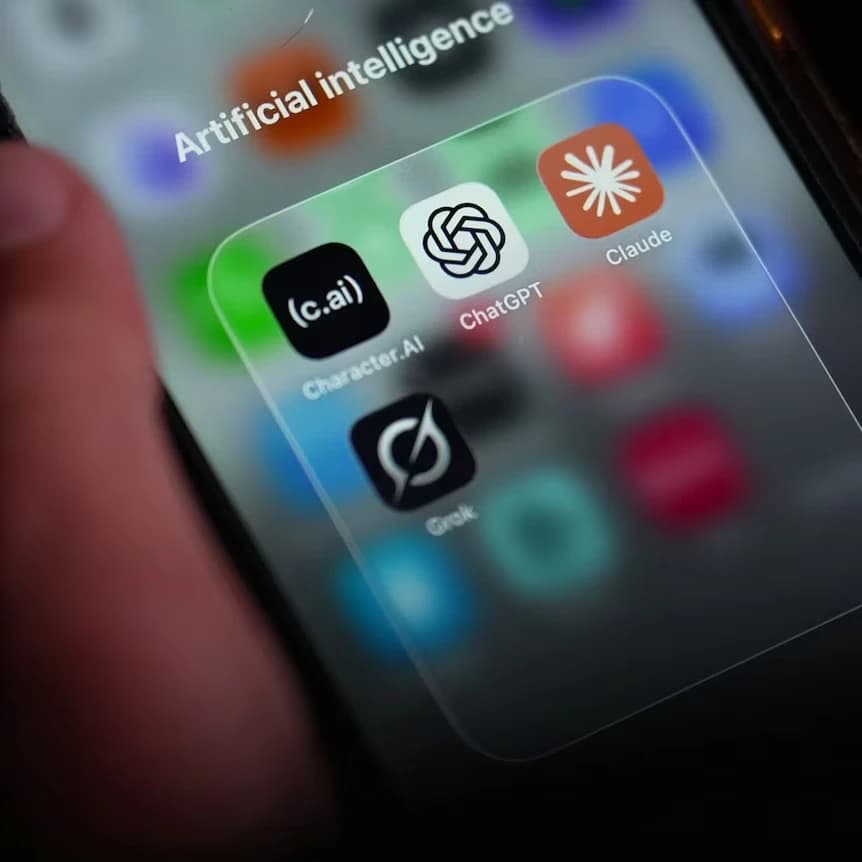
AI is reshaping space exploration and digital content creation through the same core capability: machine-learning systems that process vast data, make autonomous decisions, and generate new output with minimal human intervention. In space, that means rovers that navigate Mars on their own and telescopes whose imagery is cleaned and composited by algorithm. In media, it means models that draft articles, images, and video on a prompt. The two fields look unrelated, but they run on the same advances — and they raise the same unresolved questions about ownership, accountability, and trust.
The fields are closely intertwined, each pushing the other forward. What follows walks through how AI is transforming both, the ethical and legal challenges it surfaces, and the broader trend they share.
AI in Space Exploration
AI is revolutionizing space exploration by enhancing data processing, automating spacecraft, and improving image generation. In missions like the Mars Rover and the James Webb Space Telescope, machine learning algorithms process vast amounts of data to identify patterns, detect anomalies, and make real-time decisions. AI helps the Mars Rover autonomously navigate the Martian surface, choosing the best paths and avoiding obstacles — work that significantly enhances mission efficiency, since the rover does not wait on round-trip commands from Earth.
AI is also pivotal in analyzing data from space telescopes. The James Webb Space Telescope captures ultra-high-resolution images of distant galaxies; AI algorithms then enhance clarity, remove noise, and generate composite images that give a more comprehensive view of celestial objects. The bottleneck in modern astronomy is rarely capturing data — it is processing it, and that is the part AI absorbs.
AI in Digital Content Creation
In digital content, AI is becoming a creative force, capable of generating everything from written articles to music and visual art. Generative AI models like OpenAI's GPT series can write coherent articles, create poetry, or draft legal documents from a few input prompts — the same underlying capability reshaping the economics of writing software itself. The same capability extends to high-quality images and video, increasingly used across marketing, entertainment, and journalism.
But the rise of AI-generated content brings significant ethical and legal challenges — copyright infringement, the authenticity of content, and the potential for deepfakes are all live debates. The use of AI in space exploration is less controversial, yet it raises a parallel question: who owns and controls AI-generated data?
Ethical and Legal Challenges
Copyright and Intellectual Property
One of the most pressing legal challenges of AI-generated content is copyright. Copyright law has long assumed a human creator. With AI generating text, images, and even software code, the legal system struggles to define who — or what — owns the rights. The same problem extends to space technology, where AI may generate new data or models from observations of space, raising questions about ownership and how that information is shared.
The Ethics of Autonomous Decision-Making
In space exploration, AI systems often make autonomous decisions — selecting which images to capture or which data to prioritize, not unlike the autonomous multi-agent networks now underwriting private credit deals without waiting on a human to prompt each step. The ethical stakes are significant when those choices could miss critical information or endanger a mission. Ensuring AI systems are transparent, accountable, and ethically programmed is crucial for the future of both space exploration and digital content creation.
A Shared Trajectory
Advances in space technology like the James Webb Space Telescope mirror broader trends in AI: a movement toward autonomous, intelligent systems that handle complex tasks with minimal human intervention. In both domains the push is toward systems that are not only more capable but more resilient, adaptable, and able to learn from experience.
The intersection is clearest in projects like SpaceX's Starship, where AI helps optimize design and mission planning. AI also simulates space environments, letting engineers build more robust spacecraft and plan missions with greater precision. These are markers of a wider pattern — AI integrated into nearly every layer of technological development, from deep space to everyday digital tools.
| Domain | What AI does | The governance gap |
|---|---|---|
| Space exploration | Autonomous navigation, telescope data analysis, mission planning | Ownership of AI-generated data; accountability of autonomous decisions |
| Digital content | Generates text, images, video from prompts | Copyright, authenticity, deepfakes |
The Bottom Line
The future of AI in space involves more autonomous systems handling complex tasks with minimal oversight, and a parallel future in media where generated content keeps outrunning the rules meant to govern it. The technical trajectory of these intertwined fields is largely set; the unsettled work is governance — defining ownership, ensuring transparency, and keeping autonomous decisions accountable. The teams and institutions that solve those questions, not just the model benchmarks, will shape how far AI carries both frontiers.
Explore Related Concepts
Frequently Asked Questions
How is AI used in space exploration?
AI assists with autonomous spacecraft navigation, analyzing telescope and satellite data at scale, optimizing mission planning, and identifying anomalies in deep space imagery.
Can AI analyze space data faster than humans?
Yes — AI can process and classify millions of data points from telescopes and probes in hours, work that would take human researchers years.
How does AI help with digital content creation for space agencies?
AI generates visualizations, translates complex data into public-friendly graphics, and automates reporting from mission telemetry.
Is AI used in Mars missions?
Yes — the Perseverance rover uses AI for autonomous hazard avoidance and target selection, allowing it to navigate terrain without waiting for Earth commands.