GENERATIVE AI
What generative AI is, how it differs from earlier AI, and what it means for technology, business, and creative work.
Part of: AIGenerative AI is the branch of artificial intelligence focused on synthesis — producing new content indistinguishable from human-created examples — rather than classification or prediction.
Key Modalities
- Text — Large language models like Claude and GPT-4 draft, summarize, and reason over natural language at scale.
- Image — Diffusion models like Midjourney and Stable Diffusion generate photorealistic or stylized visuals from text prompts.
- Code — Tools like GitHub Copilot and Cursor autocomplete, refactor, and generate entire functions from natural language descriptions.
- Video — Models like Sora and Runway synthesize short video clips from text or image prompts, compressing production timelines dramatically.
- Audio — Services like ElevenLabs clone voices and Suno generates full songs, making audio synthesis accessible to non-professionals.
Each modality uses somewhat different architectures but shares the same core paradigm: learn statistical patterns from massive datasets of human-created content, then sample from those patterns to produce new outputs. This reliance on learned patterns is a direct extension of machine learning at scale.
Business Impact
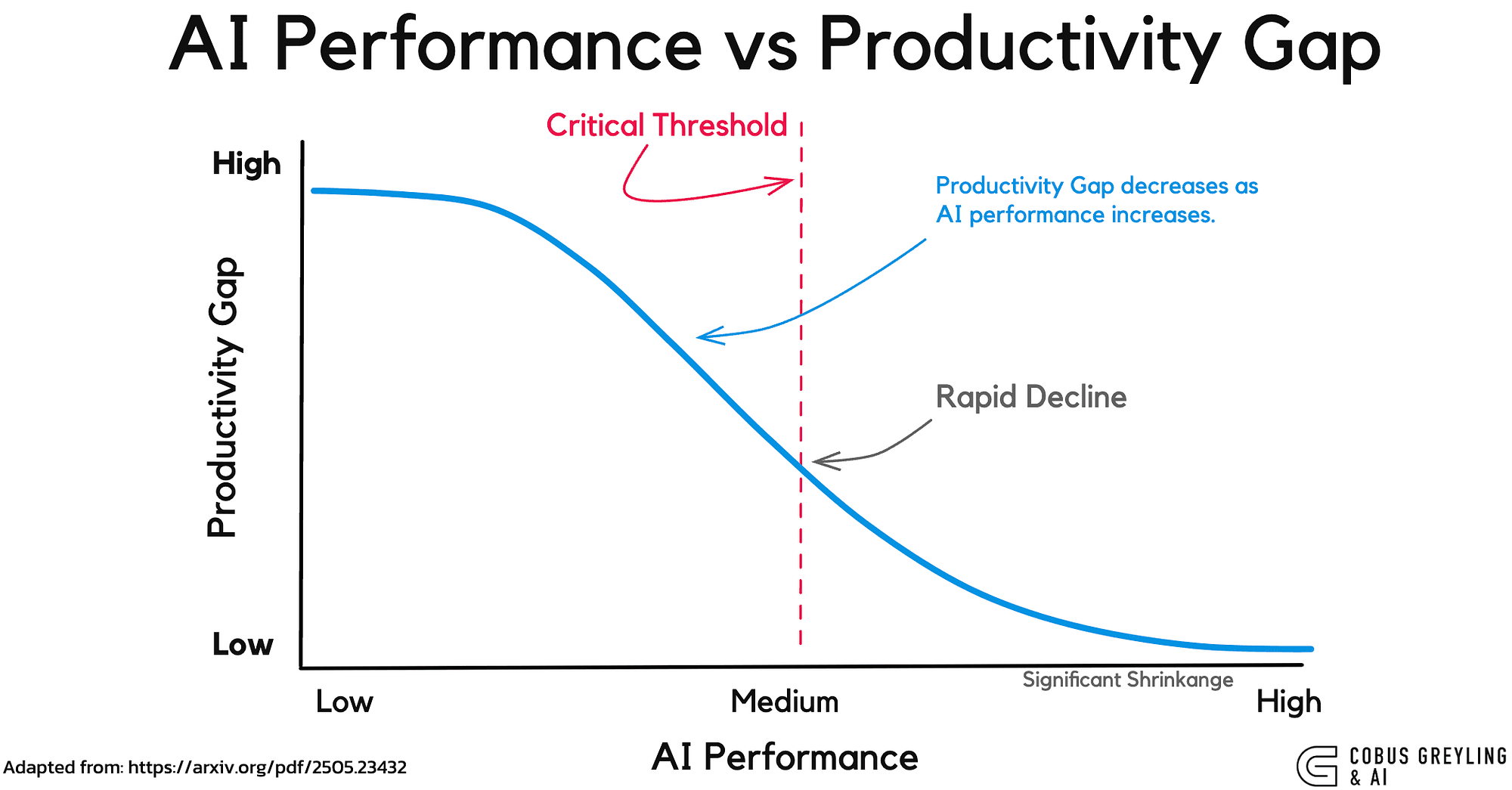
Generative AI is compressing the cost of content creation, software development, and knowledge work at a rate that is genuinely disruptive. Productivity gains for individual practitioners are documented and large. The organizational and competitive implications are still being worked out — which is why this remains one of the most valuable areas to track carefully rather than reactively here at The Best Blog Ever.
How It Actually Works
The dominant architecture is the transformer, trained on next-token prediction across internet-scale text. The counterintuitive finding is that this simple objective — predict the next word — produces emergent capabilities in reasoning, translation, and code synthesis that nobody designed explicitly. Capabilities emerge from scale, not from direct engineering. This is what distinguishes the current generation from earlier AI systems and why it caught most researchers off-guard. The same foundation now underpins AI agents that chain model calls into autonomous workflows.
The Quality Ceiling Problem
Generative AI produces fluent, confident output that is sometimes wrong. Hallucination — generating plausible-sounding falsehoods — is not a bug to be patched but a structural property of probabilistic text prediction. These models are not knowledge bases. This is the central deployment challenge: outputs require human review in proportion to the cost of being wrong. For low-stakes creative work, the quality floor is high enough to be useful immediately. For legal, medical, or technical contexts, the stakes demand verification infrastructure that partially offsets the productivity gains.
Where Value Actually Accrues
Most generative AI application businesses sit on top of commodity APIs and compete primarily on UX and distribution. Durable value is upstream — in foundation models and the compute infrastructure required to train them — and in applications with proprietary data or deep workflow integration that cannot be replicated by pointing a different API at the same interface. The economics here echo broader platform economics, where control of the underlying layer confers outsized leverage.
Open Questions
- Can hallucination rates be reduced to acceptable thresholds for high-stakes professional use cases without destroying throughput?
- Which application categories will consolidate into a few platform winners versus fragment into durable niche tools?
- How does open-source model development shift the leverage between frontier labs and application builders over time?
- What regulatory frameworks will stick, and which jurisdictions will set the effective global standard?
Part of the knowledge graph at The Best Blog Ever — reference definitions for ideas that matter.