FUTURE OF WORK
How AI, automation, and structural economic shifts are changing what work looks like, which jobs transform, and how organizations adapt.
Part of: BusinessThe future of work is a multi-decade transition driven by converging forces — AI automation of knowledge work, remote and distributed work normalization, demographic shifts in labor supply, and the restructuring of organizational forms enabled by software.
What the research shows
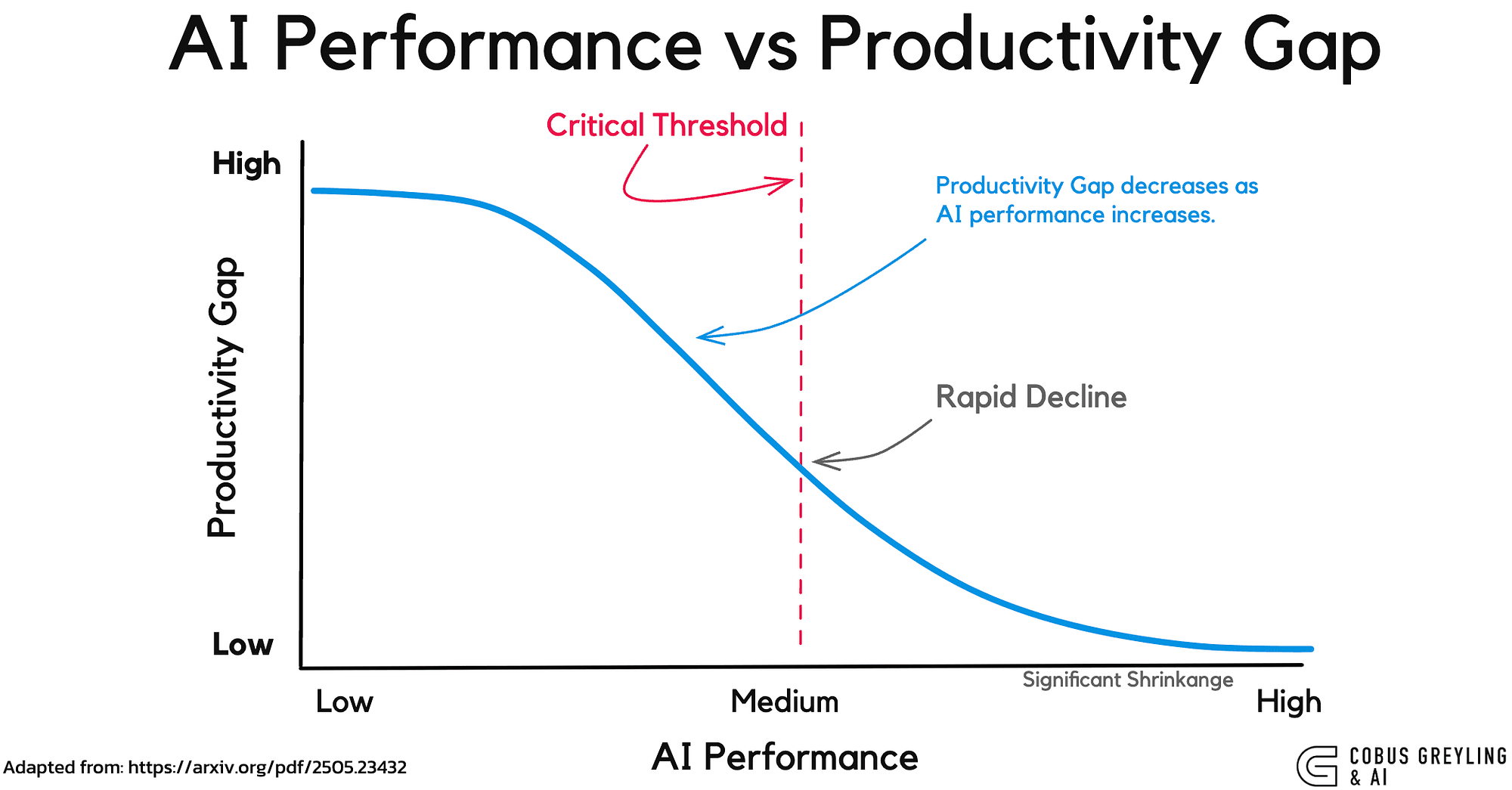
Productivity gains from AI tools are real and measurable for individual practitioners. The macroeconomic impact is harder to measure and longer-lagged. Historical analogies — the industrial revolution, electrification, computing — suggest that general-purpose technology adoption creates more jobs in aggregate than it destroys, but the transition period involves significant disruption concentrated in specific roles and demographics.
The most useful analytical frame is not "jobs that will be eliminated" but "tasks that will be automated within jobs." Most roles contain both automatable and non-automatable tasks. AI tools are compressing the time required for automatable tasks — drafting, research, data analysis, code generation — which means the same worker can do more, or organizations can achieve the same output with fewer workers. Both outcomes are happening simultaneously in different sectors.
For operators
The organizations adapting fastest are those redesigning workflows around AI capabilities — a deeper form of digital transformation — rather than treating AI as a bolt-on productivity tool. The constraint is no longer raw output capacity. It is judgment, creativity, relationship management, and the organizational capacity to absorb change faster than competitors. Teams that embed AI into the core of how work gets done — rather than as an optional accelerant — are pulling ahead in execution speed and cost structure.
The skills premium is shifting
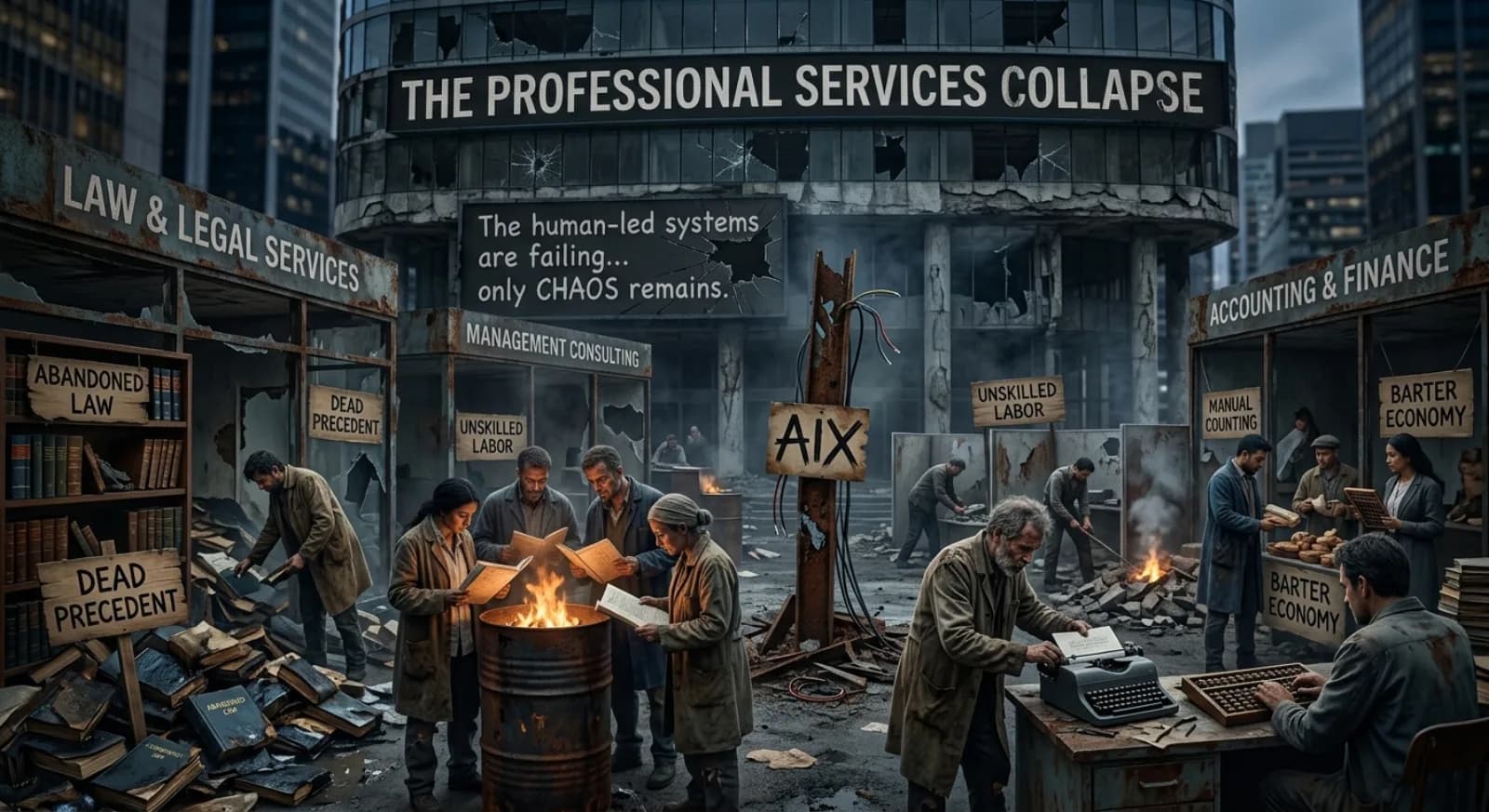
Decades of labor economics research showed rising returns to cognitive skills — the knowledge worker era. AI is now compressing returns to routine cognitive tasks while amplifying returns to judgment, taste, and interpersonal skills that AI cannot replicate. The workers most exposed are not low-skill manual laborers, who were already disrupted by earlier automation waves powered by machine learning, but mid-tier cognitive workers: paralegals, junior analysts, entry-level programmers, and writers producing commodity content. The distribution of disruption is concentrated in precisely the roles that the previous technology wave created, which is why the political and social implications are more complex than simple narratives about blue collar versus white collar work capture.
The organizational form question
Remote work normalization, AI capability, and software coordination tools are collectively enabling much smaller teams to build and operate much larger systems. The minimum viable company is shrinking. This creates opportunity — small teams can compete with incumbents in ways that were not structurally possible before — and risk. Coordination overhead scales nonlinearly when teams grow, and the skills required to manage distributed teams augmented by AI agents differ from managing co-located human ones. The organizations that figure out the new optimal team structure and management model earliest will have a durable hiring and execution advantage.
Open Questions
- Will productivity gains from AI accrue primarily to capital or to workers, and what policy interventions — if any — can shift that distribution?
- How do organizations train and develop workers when entry-level roles that historically built foundational skills are increasingly automated away?
- Does the shrinking minimum viable company accelerate labor market fragmentation toward independent contractors, or does talent consolidate inside a smaller number of high-capability firms?
- At what point does AI-assisted output stop counting as a signal of individual skill, and what replaces it as a credentialing mechanism?
Part of the knowledge graph at The Best Blog Ever — reference definitions for ideas that matter.
Related Concepts