Toy Story 5's Technology Problem
The franchise that was born from a technological breakthrough now casts a device as the threat. Toy Story 5 names the anxiety of the screen age, but stops short of interrogating the industry behind it.
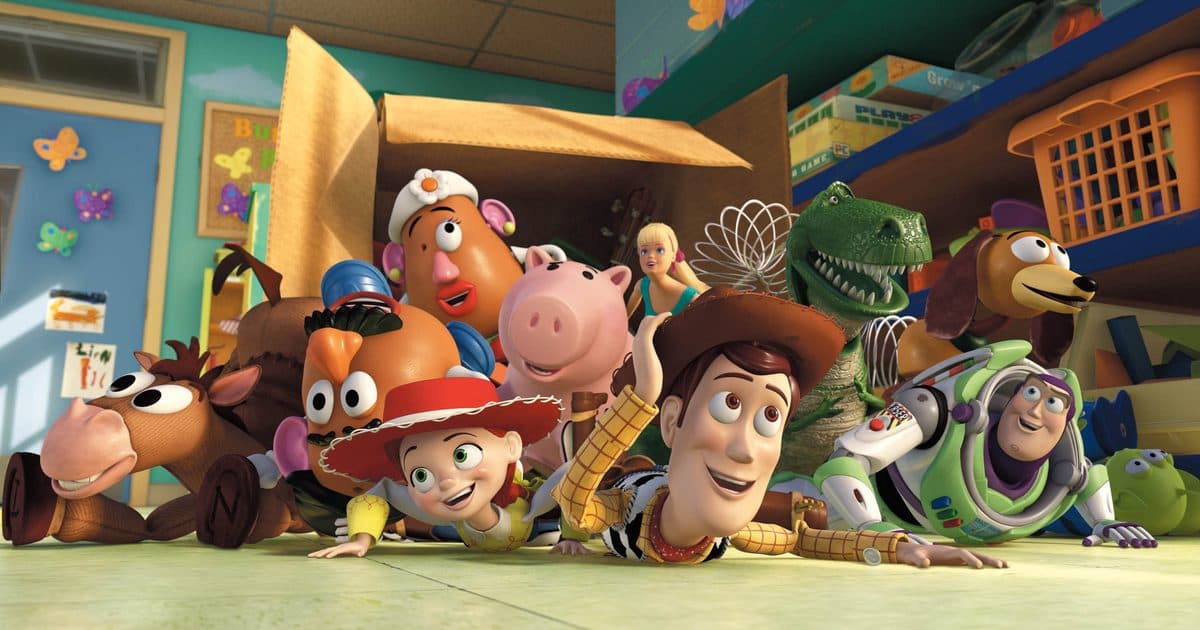
Toy Story 5 arrived in theaters on June 19, 2026 with a logline Pixar repeated like a thesis statement: "Toy meets Tech." For the first time in thirty years, the thing threatening Woody and Buzz isn't a jealous kid, a daycare, or the slow gravity of growing up — it's a device. The film hands eight-year-old Bonnie a tablet, watches her fall for it, and asks what happens to a roomful of analog toys when their kid discovers a glowing rectangle that talks back. It is the most pointed the franchise has ever been about technology, and on the question that matters most, it is also strangely unwilling to commit.
A franchise built on the thing it now fears
There is an irony baked into the premise that the movie never quite acknowledges. The original Toy Story, in 1995, was itself a piece of disruptive technology — the first feature film animated entirely on computers, a proof that a new tool could carry a story the old ones couldn't. Pixar didn't just make a movie about toys; it used Woody and Buzz to announce that the future of animation had arrived.
Three decades later, the same franchise casts a screen as the antagonist, which is a little like the printing press publishing a pamphlet against literacy. The tension is genuinely rich, and it sits right in the DNA of the series. But Toy Story 5 treats that history as set dressing rather than subject, and the choice quietly limits how far the film is willing to push its own argument.
What the movie does with technology
The device has a name and a face. Lilypad — "Lily" for short, voiced by Greta Lee — is a frog-themed tablet Bonnie's parents give her in the hope it will help her socialize. According to Disney's own synopsis, Lily arrives with "her own disruptive ideas about what is best" for the kid, and the toys' jobs are suddenly challenged in a way no rival toy ever managed. Bonnie gets hooked. Play stops.
The specifics are where the film is sharpest. Jessie, now running the room, has to explain to a tablet why a child needs a real friend — and Lily, taking the instruction literally, fires off a social-media friend request to a classmate on Bonnie's behalf. There's a running gag where the device cheerfully re-renders a heartfelt speech "now in Spanish," the machine flattening sincerity into a feature. As a portrait of how a screen colonizes a child's attention, these beats are observant and often funny, and they are the best thing the movie does.
The villain it refused to name
And yet the filmmakers went out of their way, before release, to insist that Lilypad is not the villain. That single decision tells you where the movie's nerve runs out. By making the tablet a character — sympathetic, a little lonely, ultimately befriendable — Toy Story 5 converts a structural problem into an interpersonal one.
The question stops being "what is this device engineered to do to a child's attention?" and becomes "can the toys learn to get along with the new arrival?" Those are not the same question, and the distance between them is exactly where the real story about technology lives. A tablet does not have lonely intentions. The people who design it have business models, and those models — the attention economy and its network effects — depend on precisely the compulsion the film spends its first act dramatizing. By giving the machine a heart, the movie lets the platform economics behind it off the hook.
The economics it leaves offscreen
It helps to look at the ledger. Variety reported that Toy Story 5 carried a production budget in the neighborhood of $250 million, and it opened to franchise-record business — the kind of number that exists because Disney has spent thirty years turning these characters into one of the most efficient merchandising engines in entertainment. The film is financed by a flywheel that converts childhood attachment into recurring revenue.
A film built on that flywheel, lecturing children about a consumer device that captures their attention and monetizes it, is participating in the very dynamic it critiques. Disney is an attention business. So is the tablet. The movie's reluctance to look hard at the economics of capturing a child's focus may be less a creative oversight than a structural one: it is difficult to indict the machine you are standing inside.
Where it actually lands a punch
None of this means the film fails. The PG rating — a first for the mainline series, granted for "some thematic elements and rude humor" — signals a movie reaching for something heavier than the previous four, and the reach mostly connects. Critics were broadly positive about the visuals, the voice performances, and the emotional themes, even as they split over the script and over whether a fifth chapter needed to exist at all.
The core feeling is true. Most parents have watched a kid go quiet and glassy in front of a screen, and Toy Story 5 dramatizes that drift with real tenderness rather than scolding. As a film about the anxiety of the screen age, it lands cleanly. The trouble is only that it mistakes the anxiety for the analysis.
Does it go hard enough?
So: does Toy Story 5 go hard enough on technology? On the symptom, yes. On the system, no. Going hard would have meant naming what the earlier films never had to name — that the device is not a lonely creature seeking friendship but a product tuned, deliberately, to win a contest for attention it is built never to lose.
It would have meant letting Lily be a little frightening, or letting the parents be a little complicit, or letting the resolution cost something more than a hug. Instead the movie does the Pixar thing: it locates the problem in a relationship and resolves it with warmth. That is a beautiful instinct for a story about toys. It is an evasive one for a story that put "Tech" in its own logline. The franchise that once embodied digital transformation now treats it as a weather system to be endured rather than a set of choices made by people with incentives.
The Bottom Line
Toy Story 5 is the rare blockbuster brave enough to make technology its subject and too careful to make it its target. It diagnoses the screen age with genuine feeling and prescribes friendship — a Pixar answer to a problem that is, underneath, an industrial one. For most audiences that will be more than enough, and the box-office numbers suggest it is.
But for a series that began as the technology, that hedge is the most revealing thing about it. The toys learned to live with the tablet. The harder, truer movie would have asked who built it, and why it was so good at winning.
Explore Related Concepts
Frequently Asked Questions
Is Toy Story 5 about technology?
Yes. Its official logline is "Toy meets Tech," and the plot centers on Lilypad, a tablet device that disrupts the toys' relationship with their kid, Bonnie.
Who is Lilypad in Toy Story 5?
Lilypad, nicknamed "Lily" and voiced by Greta Lee, is a frog-themed tablet Bonnie receives from her parents. It quickly becomes her favorite plaything.
Is the tablet the villain in Toy Story 5?
No. The filmmakers stated publicly that Lilypad is not the film's villain, a choice that softens the movie's critique of technology.
When did Toy Story 5 come out?
Toy Story 5 was released in U.S. theaters on June 19, 2026, after premiering in Los Angeles on June 9, 2026.
Did Toy Story 5 get good reviews?
Reviews were broadly positive, with praise for the visuals, voice work, and themes. Critics were more divided on the script and on whether a fifth film was necessary.
What is Toy Story 5's message about screen time?
The film dramatizes how a device can pull a child away from imaginative play, but it frames the answer as friendship rather than examining the technology industry itself.