The EU AI Act's High-Risk Clock Has Run Out
Europe's AI Act completed its enforcement transition in August 2026. The two-year runway is gone — and most operators still have not done the work.
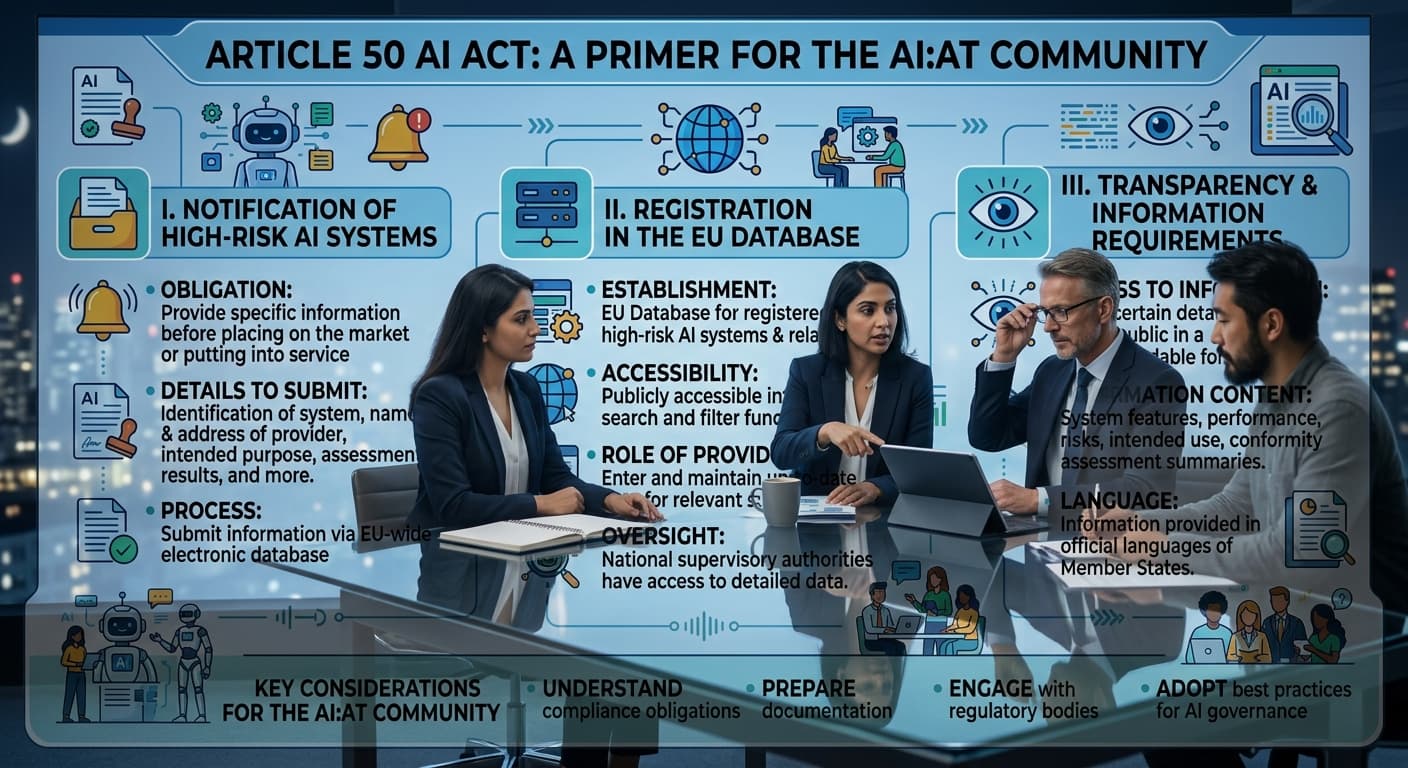
The European Union's AI Act became law in August 2024 after three years of negotiation, and most companies treated it the way they treated GDPR in 2016: a regulation worth monitoring, not yet acting on. The 24-month implementation period for high-risk artificial intelligence systems seemed like a comfortable buffer. On August 2, 2026, that buffer expired. Companies with unassessed AI systems operating in EU markets are now non-compliant by default, and the European AI Office established to oversee enforcement has had more than a year to organize. Founders and operators who have been deferring this work are now late.
This is a different kind of compliance moment from GDPR's famously slow start, where early enforcement was selective and material penalties took years to materialize. The AI Act's high-risk categories are enumerated directly in legislation rather than defined through regulatory guidance after the fact. The obligations for companies in those categories are specific and auditable. Waiting to see how aggressively the regulation is enforced before doing an assessment is a reasonable business calculation for legacy GDPR violations; for the AI Act, the regulatory machinery was designed to be operational from day one of enforcement.
What "High-Risk" Actually Means
The EU AI Act divides AI systems into four tiers. Prohibited practices — AI used for manipulative social scoring, indiscriminate real-time biometric surveillance in public spaces, and a handful of other techniques — were banned outright from February 2025. General-purpose AI models faced transparency and systemic risk obligations from August 2025. The August 2026 deadline added the largest regulated category: high-risk AI systems, defined in Annex III of the regulation across eight enumerated domains.
Those domains map directly to some of the most commercially active areas of AI deployment. They include biometric identification systems, AI used to manage critical infrastructure, systems that determine access to education or vocational training, employment tools including CV screening and task allocation, systems governing access to essential services like credit or emergency response, law enforcement and predictive tools, migration and asylum processing systems, and AI used in judicial proceedings. Any company whose product falls into one of these categories, and whose output is used by EU persons, is in scope regardless of where the company is incorporated or where its servers are located.
The Classification Problem
The most practically difficult part of the EU AI Act is not the compliance itself — it is the prior step of determining whether a given system qualifies as high-risk. The regulation's categories are broad enough to capture many products that do not obviously present as AI regulation problems. An HR workflow platform that uses a model to rank job candidates might be high-risk. A lending product that uses AI to surface risk signals for loan officers might be high-risk. An educational platform that gates premium content access based on a model's assessment of user engagement might be high-risk.
The regulation hinges on a distinction that matters enormously in digital transformation product design: whether an AI's output is a genuine input into a human decision, or whether it is, in practice, the decision. A system that generates ranked lists for human review — where a human meaningfully engages with multiple candidates and frequently overrides the AI's ordering — occupies very different regulatory ground from a system that surfaces a single recommendation the human approves in fifteen seconds without reviewing alternatives. Regulators and courts will be probing this distinction, and the companies that can demonstrate real human oversight rather than nominal oversight will be on better footing when the first enforcement actions land.
The Operator Compliance Model
The AI Act does not treat all participants in an AI deployment equally, and understanding the operator role is the first step in any compliance assessment. In the Act's framework, a "provider" creates the AI model and bears responsibility for its fundamental capabilities and safety characteristics. An "operator" deploys that model in a specific context and bears responsibility for that deployment. The operator compliance model means that a company building an HR tool on a foundation model cannot discharge its EU AI Act obligations by pointing to the foundation model provider's technical documentation — it must assess whether the deployment context itself, in the domains where the tool is actually used, meets high-risk obligations. This distinction reshapes how compliance responsibility flows through the AI agent supply chain: it is the operator's context, not the model's existence, that triggers the high-risk classification.
What Compliance Requires
For systems that fall within the high-risk category, the requirements are specific and demanding. Companies must conduct conformity assessments before deploying or substantially updating high-risk systems — for most categories, this can be self-assessed rather than requiring an external auditor, but the documentation must be rigorous and defensible. Technical documentation must cover the system's intended purpose, training data characteristics, validation methodology, accuracy and robustness metrics, and cybersecurity measures appropriate to the risk level.
Operational obligations include maintaining logs sufficient to trace decisions for a minimum period, registering the system in the EU's publicly accessible database before deployment, displaying clear disclosures to users interacting with AI-generated outputs, and building human oversight into the product architecture rather than treating it as a downstream add-on. When a system undergoes a substantial update that changes its capabilities or the population it serves, the conformity process begins again. Foundation model providers faced their own separate set of transparency and systemic risk obligations under the general-purpose AI provisions that took effect in August 2025 — compliance with the model layer does not substitute for compliance at the application layer.
The Extraterritorial Logic
Like GDPR, the EU AI Act applies based on where AI outputs are used, not where the company deploying the AI is incorporated. An American startup whose product is used by European employers to screen job applicants is in scope. A SaaS company whose customers use the product to make credit decisions in Germany is potentially in scope. The test is whether the system is used in the EU to affect EU persons in a high-risk context, and that test does not care about the company's registered address or where its engineering team works.
This creates a due diligence requirement most companies have not fulfilled. Operators cannot discharge their EU AI Act obligations by pointing to a foundation model provider's compliance documentation. The operator — the company that builds and deploys the application — bears responsibility for the deployment context. The supply chain of compliance does not flow automatically from the model to the application: each deployment context requires its own assessment, and operators who assume otherwise are exposed to liability they have not mapped.
Market Analysis
The EU AI Act is accelerating a compliance infrastructure market that barely existed eighteen months ago. Legal technology firms, GRC platforms, and specialized AI auditors are all expanding capacity to serve companies that need conformity assessments, technical documentation templates, and ongoing monitoring capabilities. The early entrants are pricing this work at a significant premium over what the market will bear in three years, once enforcement actions force the late-majority to act simultaneously and competition among compliance providers intensifies.
The regulation creates a meaningful competitive asymmetry in the near term. Large enterprise software incumbents — established HR platforms, core banking systems, healthcare IT vendors — have compliance teams and legal resources that allow them to navigate the Act systematically without materially disrupting their product roadmaps. Startups operating in the same regulated categories, particularly American startups without dedicated regulatory staff, face the same obligations but with a much smaller resource base. The platform economics of regulated AI favor incumbents in the short run, as the fixed costs of compliance represent a larger share of a startup's operating budget than they do for a company with established infrastructure. Startups that treated compliance as a product design principle from the beginning — building human oversight, logging, and disclosure into the architecture — face substantially lower retrofit costs than those that deferred.
What Investors Should Understand
For investors in AI-adjacent companies, the August 2026 transition is a material event that changes the risk profile of several portfolio categories. The central due diligence questions are whether the portfolio company has classified its AI systems under the regulation, whether it has conducted conformity assessments for high-risk systems, and what the compliance cost structure looks like on a forward basis. High-risk classification is not disqualifying, but it is a meaningful constraint on product velocity and a real operating cost that affects unit economics in regulated categories.
Companies that have been operating in employment, credit, or education with AI systems and have not completed conformity assessments are carrying regulatory liability that is now quantifiable. Enforcement patterns will vary across EU member states and will take time to materialize — the regulation is new, the AI Office has finite resources, and the first round of enforcement actions will focus on the highest-impact violations. But the correct investment posture is to treat unresolved compliance as a known liability on the balance sheet, not a speculative risk. Investors who have not asked portfolio companies to classify their AI systems are carrying risk that belongs in the fund's risk register.
The Product Design Response
The companies best positioned after August 2026 are not the ones with the best legal teams — they are the ones whose products were designed to maintain real human oversight, display clear AI disclosures, and generate decision logs as a matter of course. These are not only compliance features; they tend to correlate with better product outcomes. Systems where humans genuinely engage with AI recommendations before taking consequential action produce fewer errors and generate more defensible audit trails regardless of regulatory context.
The EU AI Act is pushing toward a future of work model where AI systems assist human judgment rather than replacing it in high-stakes decisions. For companies building in employment, financial services, healthcare, or education, this design principle should be non-negotiable regardless of EU exposure. The regulation codifies a product architecture that was already sound. Companies now being forced into it by compliance deadlines are arriving at the right answer by the wrong path — but for users, the outcome is the same.
Risks
Several uncertainties remain that operators and investors should track rather than resolve prematurely. Classification guidance from the European AI Office continues to develop through implementing acts and official opinions; companies that have assessed a system as limited-risk may find that interpretations shift, requiring retroactive compliance work. Enforcement patterns will initially focus on the most visible harms in the highest-impact categories, which means that violations in more obscure categories may go unaddressed for years — but compliance is not optional simply because enforcement is probabilistic. The AI Act also sits within a broader regulatory stack: GDPR imposes its own requirements on AI systems that process personal data, sectoral regulations in finance and healthcare add further obligations, and the interaction between these frameworks creates complexity that a single compliance assessment cannot resolve. Companies operating in multiple EU member states with different national enforcement authorities face the additional challenge of managing inconsistent interpretations of the same regulation across jurisdictions.
The Bottom Line
The EU AI Act's high-risk provisions are present law, not forthcoming policy. Companies operating AI systems in employment, credit, education, biometric identification, or the other enumerated categories are required to have completed conformity assessments, registered their systems in the EU database, and implemented compliant human oversight architectures. The practical path forward is methodical: classify every AI system the company deploys, assess which fall within the high-risk categories, build conformity documentation for those that do, and redesign product architectures that currently rely on nominal rather than substantive human oversight. The companies that approach this as a product design opportunity will build more defensible businesses than the companies treating it purely as an administrative tax. The companies that continue to defer will find that the window they missed in August did not reset in September.
Related
- OpenAI's For-Profit Conversion: The Hidden Governance Cost
- Nations Are Building AI: Sovereign AI Strategies Explained
- Agentic AI Workflows: What Actually Ships in the Enterprise
Sources
Explore Related Concepts
Frequently Asked Questions
What happened on August 2, 2026 with the EU AI Act?
The 24-month implementation period for high-risk AI systems expired, bringing the full compliance requirements into force for AI systems used in employment, credit, education, biometric identification, and other regulated categories.
Does the EU AI Act apply to non-European companies?
Yes. Like GDPR, the EU AI Act applies to any company whose AI system is used in the EU to affect EU persons in high-risk contexts, regardless of where the company is registered.
What is a high-risk AI system under the EU AI Act?
High-risk AI systems are defined in Annex III of the regulation and include systems used in biometric identification, critical infrastructure, employment decisions, educational access, essential services like credit scoring, law enforcement, migration processing, and judicial proceedings.
What does EU AI Act compliance require for high-risk systems?
Operators must conduct conformity assessments, maintain detailed technical documentation, implement human oversight architectures, log decisions for at least six months, and register systems in the EU's public database before deployment.
How does the EU AI Act affect AI startups?
Startups face the same obligations as large companies, but compliance costs represent a larger share of their resources. High-risk classification creates documentation, logging, and oversight requirements that affect product velocity and operating costs.