The Mango Millionaire's Equation
A 100-hectare farm in northern Peru, 50 productive hectares, 20,000 trees — and an investment-to-income model worth examining closely.
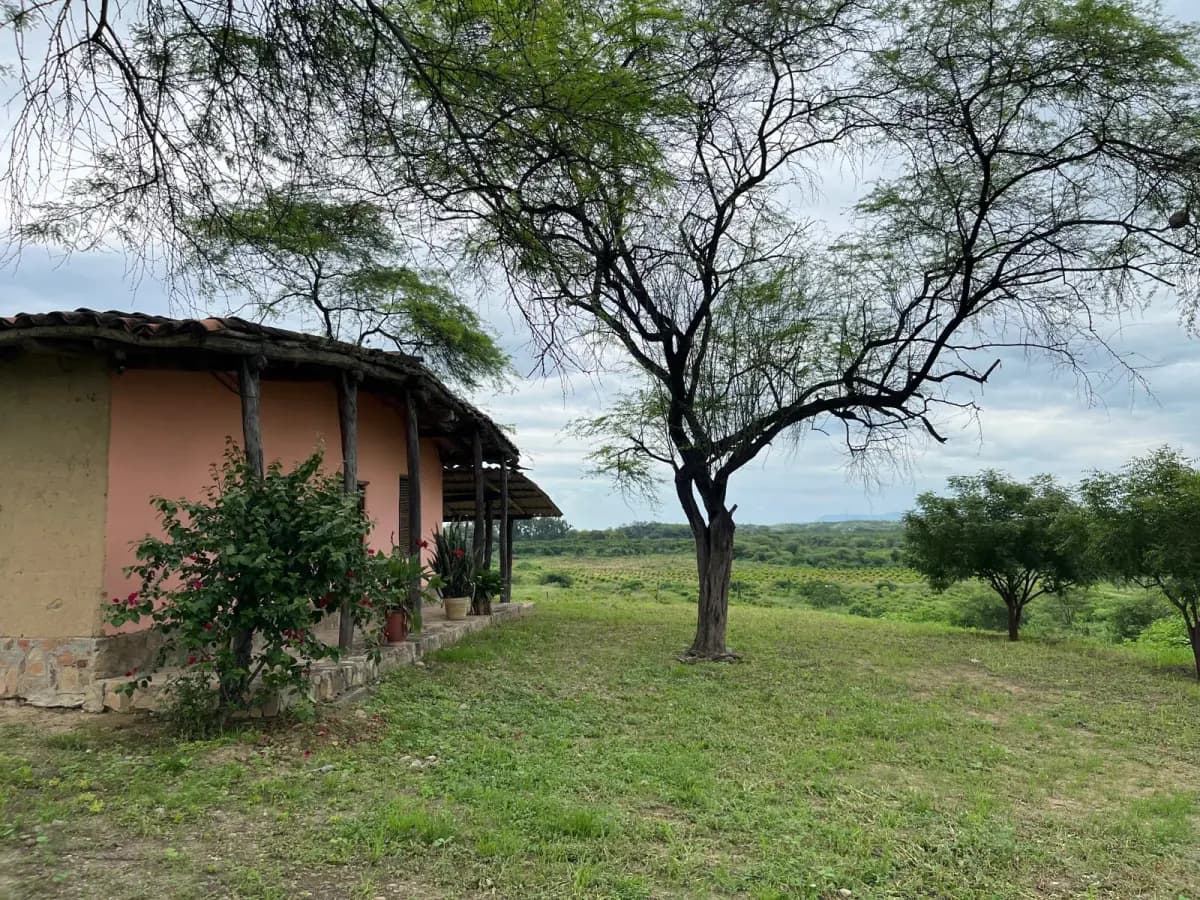
A 100-hectare Kent mango farm in northern Peru is one of the more striking agricultural investment cases on paper: a low land-entry cost, a structurally favourable export window, and a 40-year productive asset. This piece walks the full model — land, setup, yield, revenue, and a realistic ROI timeline — built up from concrete inputs and cross-referenced against published industry benchmarks. It is analysis of an opportunity, not a recommendation to act; treat every projection as illustrative, not a promise.
This is not financial advice. All figures below are illustrative models based on published industry data. Actual results depend on management quality, climate, water security, regulatory compliance, and volatile export prices. Do your own due diligence and consult a licensed advisor before committing capital.
Why This Opportunity Exists Right Now
Agricultural investment pitches usually have one of two weaknesses: soft numbers or bad market timing. The Peruvian mango case has neither — the numbers are as hard as agricultural ROI analysis gets, and the market backdrop is structurally favourable for the next decade.
The setup: the US imports over 99 percent of the mangoes it consumes, at a rate growing 8 percent a year. The global mango market is $73 billion in 2025, heading for $107 billion by 2030. Peru's December-to-April export window is the only period when premium fresh Kent mangoes reach Northern Hemisphere supermarkets from a reliable, certified, large-scale origin. And Piura agricultural land remains priced far below equivalent productive farmland in Florida, Spain, or Australia.
The opportunity exists because it has always looked complex: a foreign country, a tropical crop, a long establishment phase, currency risk. Those are real considerations — and they are exactly why the returns look the way they do. Complexity is where margin lives. The investors who went into Peruvian avocados in 2010 understood this; the mango market today is structurally similar, except it is roughly four times larger than the avocado market was then.
The Farm: 100 Hectares, 50 in Production
The model assumes a 100-hectare farm in Piura or Lambayeque, run at 50% utilisation. The other 50 hectares covers access roads, irrigation corridors, packhouse and cold storage, worker housing, windbreaks, buffer zones, and land held in reserve for a second planting phase. This 50/50 split is standard for professional export operations and is built into every figure here.
Land prices vary by irrigation access, established trees, and road connectivity. Raw irrigable but unplanted land runs $3,000-$8,000/ha. Land with established orchards and water rights lists at $80,000-$150,000/ha. A realistic 100-hectare entry of partly-established land prices around $10,000-$20,000/ha all-in — $1M-$2M for the full parcel.
| Land use | Hectares | Share |
|---|---|---|
| Productive mango | 50 | 50% |
| Phase 2 reserve | 15 | 15% |
| Irrigation infrastructure | 12 | 12% |
| Windbreaks + buffer | 9 | 9% |
| Roads + access | 8 | 8% |
| Packhouse + cold storage | 6 | 6% |
The Trees: Density, Yield, and the Variables That Matter
On 50 productive hectares, planting density is the single most consequential decision — it sets both the capital requirement and the revenue ceiling. Two methodologies dominate commercial Peruvian operations.
Intensive / high-density planting at 400-500 trees/ha yields 20,000-25,000 trees. Trees are kept smaller by systematic pruning; per-tree fruit is lower (80-120 kg at maturity) but total orchard yield is higher and picking efficiency is dramatically better. This is the modern, export-focused approach.
Traditional / wide-spacing at 200-300 trees/ha yields 10,000-15,000 trees. Individual trees grow large and can eventually yield 200-400 kg, but take 8-10 years to reach full output and are harder and costlier to harvest at scale.
This analysis models both, but the case is strongest for intensive planting at 400 trees/ha — 20,000 trees, full production by year 6-7, harvest-efficient, and consistently what Peru's highest-output export operations use.
| Density | Trees / 50 ha | Yield / tree | Total tonnes | Rev @ $2.23/kg | Rev @ $2.87/kg |
|---|---|---|---|---|---|
| Traditional (200/ha) | 10,000 | 160 kg | 1,600 t | $3.57M | $4.59M |
| Traditional (300/ha) | 15,000 | 140 kg | 2,100 t | $4.68M | $6.03M |
| ★ Intensive (400/ha) | 20,000 | 120-150 kg | 2,400-3,000 t | $5.35-6.69M | $6.89-8.61M |
| Ultra-dense (500/ha) | 25,000 | 80-100 kg | 2,000-2,500 t | $4.46-5.58M | $5.74-7.18M |
The Full CAPEX Breakdown: What It Actually Costs
The honest version starts with the full capital requirement. Many pitches understate setup by omitting irrigation, packhouse infrastructure, or the working capital needed to bridge the establishment phase. This includes all of them.
| Item | Unit cost | Quantity | Conservative | Best-case |
|---|---|---|---|---|
| Land — 100 ha raw / semi-established | $10K-$20K/ha | 100 ha | $1,000,000 | $2,000,000 |
| Drip irrigation (50 productive ha) | $7.5K-$10K/ha | 50 ha | $375,000 | $500,000 |
| Reservoir / water storage | lump | 1 | $50,000 | $120,000 |
| Pumping + main lines | lump | 1 | $40,000 | $80,000 |
| Kent grafted saplings | $5-$8/tree | 20,000 | $100,000 | $160,000 |
| Land prep + planting labour | $800-$1,200/ha | 50 ha | $40,000 | $60,000 |
| Fertiliser, soil prep (yr 1) | $600-$900/ha | 50 ha | $30,000 | $45,000 |
| Pest/disease mgmt (yr 1-3) | $400-$700/ha/yr ×3 | 50 ha | $60,000 | $105,000 |
| SENASA-certified packhouse | lump | 1 | $150,000 | $300,000 |
| Cold storage / pre-cooling | lump | 1 | $80,000 | $150,000 |
| Sorting / grading equipment | lump | 1 | $40,000 | $80,000 |
| Working capital (labour, mgmt, contingency, 36-mo bridge) | — | 3 yrs | $325,000 | $560,000 |
| Total all-in (3-year establishment) | $2,290,000 | $4,160,000 |
The midpoint — roughly $3.2M — is the figure the rest of this model uses. It generates $5.5M-$7.5M gross at full production, and even after $1.5M-$2M of annual operating costs, net income in a mature year exceeds the total capital invested. This is capital allocation with a long fuse and a long tail.
The Revenue Model: Three Scenarios
| Conservative | Base case | Optimistic | |
|---|---|---|---|
| Density | 300/ha | 400/ha | 400/ha |
| Total trees | 15,000 | 20,000 | 20,000 |
| Yield / tree | 120 kg | 150 kg | 200 kg |
| Total tonnes | 1,800 t | 3,000 t | 4,000 t |
| Price / kg | $2.23 | $2.50 | $3.52 |
| Gross revenue | $4.01M | $7.50M | $14.08M |
| Operating costs | − $1.6M | − $1.9M | − $2.2M |
| Net annual income | $2.4M | $5.6M | $11.88M |
| Total investment | $2.3M | $3.2M | $4.2M |
| Payback | ~5 yrs | ~4 yrs | ~2.5 yrs |
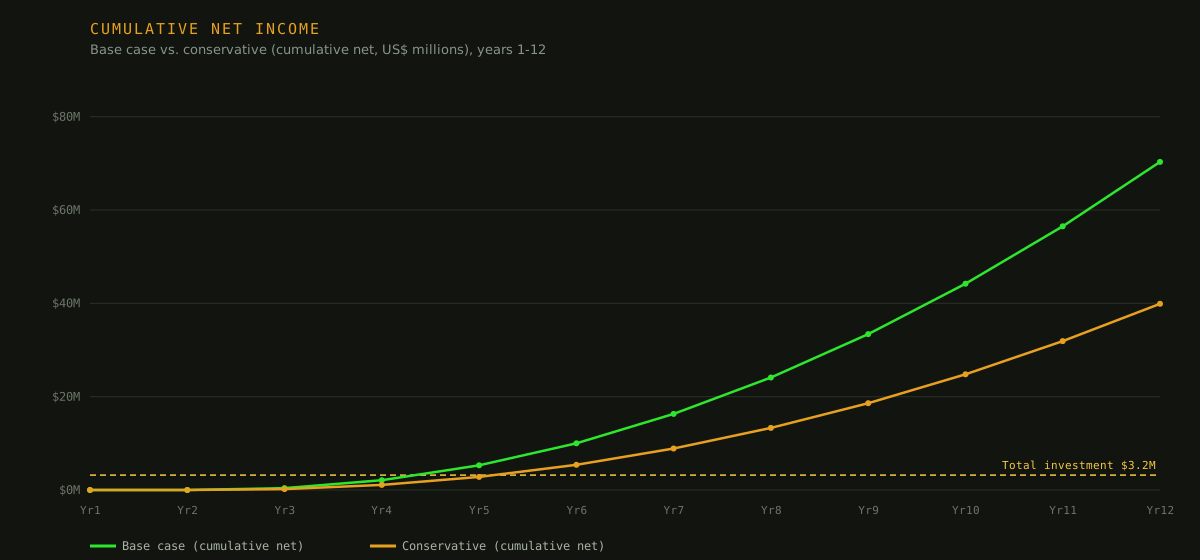 Cumulative net income, base vs. conservative, years 1-12, against the $3.2M total investment line. The base case clears its full capital cost around year 4-5.
The 10-Year Timeline: From Bare Land to Cash Machine
| Year | Phase | What happens | Revenue / net |
|---|---|---|---|
| Y1 | Establishment | Land finalised, full drip irrigation installed, 20,000 grafted Kent saplings planted, SENASA registration begun | $0 · CAPEX $1.8-$2.5M |
| Y2 | Establishment | Trees establish roots; pruning and integrated pest management at full intensity; no commercial harvest | $0 · OPEX $400-$600K |
| Y3 | Early production | First commercial fruit (20-40 kg/tree, ~400-800 t); sold domestically; packhouse commissioned, export cert obtained | $0.9-$1.8M · ~breakeven |
| Y4 | Growth | Trees at 60-90 kg (1,200-1,800 t); first full export season to Rotterdam and Newark | $2.7-$4.0M · net $1.1-$2.4M |
| Y5 | Scaling | Trees at 100-120 kg (2,000-2,400 t); off-take contracts signed; cumulative net approaches total investment | $4.5-$5.4M · net $2.9-$3.8M |
| Y7 | Full production | Mature trees at 120-200 kg, full 3,000-t season; all capital recovered (base case); no replanting from here | $7.5M · net $5.6M |
| Y10 | Mature | Prime production; going-concern value is a multiple of purchase price | Cumulative net (Y3-10): $25-35M |
Interactive ROI Calculator
Adjust the inputs to model your own scenario. The defaults are the base case (50 ha, 400 trees/ha, 150 kg/tree, $2.50/kg).
20,000 trees × 150 kg/tree = 3,000 tonnes/season. Gross: $7.50M · OPEX: $1.90M · Net: $5.60M. Full payback in 0.6 years from first planting.
Illustrative model only — not financial advice. Actual results depend on management, climate, and market conditions.
Annual Operating Costs: The Ongoing P&L
Once in full production, operating costs are significant but predictable, driven mostly by seasonal harvest and packhouse labour. The structure below is for a 50-ha intensive operation at full production in Piura.
| Cost category | Annual (conservative) | Annual (full) |
|---|---|---|
| Harvest labour | $250,000 | $450,000 |
| Pruning labour | $80,000 | $130,000 |
| Packhouse labour | $120,000 | $200,000 |
| Fertilisers | $30,000 | $45,000 |
| Pest/disease management | $55,000 | $90,000 |
| Irrigation (water + energy) | $7,500 | $12,500 |
| Packing materials | $285,000 | $500,000 |
| Freight to port (Paita) | $27,000 | $75,000 |
| SENASA inspection | $30,000 | $60,000 |
| Farm management / admin | $60,000 | $90,000 |
| Equipment maintenance | $35,000 | $60,000 |
| Insurance + legal + compliance | $25,000 | $50,000 |
| Total annual operating cost | $1,004,500 | $1,762,500 |
These costs are largely fixed: doubling per-tree yield from 100 kg to 200 kg barely moves the cost base but doubles gross revenue. That operating leverage — falling cost per tonne as the trees mature — is one of the orchard's most attractive structural features.
Peru Mango vs. Other Asset Classes
The comparison uses the base case: $3.2M invested, $5.6M net annual income at full production. It is the midpoint projection, not a cherry-picked upside.
| Asset | Investment | Annual return | Payback | Asset life | Land appreciation |
|---|---|---|---|---|---|
| Peru mango farm (base) | $3.2M | $5.6M net | ~4 yrs | 40+ yrs | 8-15%/yr Piura |
| US commercial real estate | $3.2M | $192K-$320K (6-10% cap) | 10-17 yrs | 40 yrs | 3-5%/yr |
| S&P 500 index | $3.2M | $320K (10% avg) | 10 yrs | indefinite | N/A |
| US farmland (Midwest) | $3.2M | $154K-$256K (4.8-8%) | 12-20 yrs | indefinite | 5.8%/yr (USDA 2025) |
| Peruvian avocado farm | $3.2M | $1.2M-$3.5M net | 3-6 yrs | 20-25 yrs | 10-20%/yr peak |
| Gold (physical) | $3.2M | $0 (no yield) | never | indefinite | 8-9% 10yr avg |
A mature mango orchard is one of the few assets that produces more output every year for four decades with no additional capital. Commercial real estate doesn't do that. Stocks don't. Gold definitely doesn't.
The comparison is genuinely favourable on paper — but read it as what it is: a model against benchmarks, with none of the diversification, liquidity, or passivity of an index fund. The mango return is the reward for taking on operational complexity and single-crop, single-region concentration.
How People Have Actually Got Rich Growing Mangoes in Peru
The success pattern is consistent enough to be instructive, and it does not come from the largest single player. It comes from a specific profile: medium-scale, technically sophisticated, export-focused from day one, with processing diversification as a hedge.
The pioneer families (San Lorenzo, Piura, 1990s). Piuran families converted marginal desert land — bought for near-nothing in the 1980s-90s as state irrigation was being built — into export orchards. Land bought under $500/ha is now worth $80,000-$150,000/ha with established trees. Those who held and expanded sit on assets worth 100-300x their original land cost, generating $2M-$8M net annually.
The agro-industrial entrepreneurs (Motupe, Lambayeque, 2005-2015). Lima business families and returning emigrants bought 200-500 ha parcels at $5,000-$20,000/ha, brought professional management and day-one drip irrigation, and built vertically integrated operations with packhouses and cold storage. Several have sold to international fruit conglomerates at 8-15x EBITDA — converting a decade of cash flow into a single $20M-$80M liquidity event.
The processing diversifiers (2020-present). The most sophisticated current operators don't just export fresh Kent — they run fresh export during the peak window, frozen pulp from off-grade fruit, dehydrated slices for DTC snacks, and purée contracts with beverage makers. This converts post-harvest loss (15-20% of volume) into revenue and raises revenue per tonne by 30-40% while cutting price volatility.
The fractional agro-investors (2020-present). A newer model — echoing what Agroextiende did with blueberries — packages plots within managed farms as units from $14,600-$50,000. Over 300 private investors have backed these structures without managing operations, with several reporting 18-28% net annual returns to passive investors from year 5. (As always: reported figures, not guarantees — verify any such structure independently.)
The Risks: What Can Go Wrong
An honest analysis includes the downside. Each of the following has materialised at least once in the industry's history.
| Risk | Severity | Probability | Mitigation |
|---|---|---|---|
| Price collapse (oversupply, Ecuador overlap) | HIGH | MEDIUM | Off-take contracts, processing diversification, organic premium |
| El Niño / climate shock (flowering failure) | MEDIUM | MEDIUM | Flowering prediction, crop insurance, phased planting |
| Fruit-fly interception (market-access loss) | VERY HIGH | LOW | Rigorous SENASA compliance, IPM, trap monitoring |
| Water scarcity (reservoir depletion) | HIGH | MEDIUM | Secure water rights at purchase, on-farm storage, drip efficiency |
| Currency risk (USD/PEN) | LOW | MEDIUM | Revenue is USD, cost base is PEN — the mismatch favours investors |
| Logistics failure (cold-chain break) | MEDIUM | LOW | Premium reefers, cargo insurance, certified partners |
| 3-year establishment with no income | MEDIUM | CERTAIN | Not a risk but a known cost — budget 36+ months of working capital |
The honest caveat: the January 2026 price collapse — detailed in full in Red Gold & the Scarcity Trap — saw Piura box prices fall below production cost in a single week despite a smaller crop, a reminder that year-to-year volatility is real and severe. A pure fresh-export operation with no off-take contracts and no processing capability is exposed to this every season. The operators who got rich diversified revenue and built the cold chain; the ones who lost money bet entirely on fresh spot prices with no hedge.
The Bottom Line
A 100-hectare farm in northern Peru, 50 in production, planted intensively at 400 trees per hectare — 20,000 Kent trees — models to $7.5M gross and $5.6M net annually at full production from year 7, against a $3.2M all-in investment, with payback around year 4 and a 40-year productive life. On paper, it is hard to find another asset class where a mid-single-digit-million investment produces a return like this within a decade, with land appreciation on top of the cash flow.
The caveats are equally real: a 3-year establishment phase demands patient capital, the fresh export market has brutal price swings, and water security is a rising constraint in a drying climate. The operators who navigate these — through contract farming, processing diversification, and robust water rights — are the ones who have consistently earned the returns this model describes. The complexity is the moat, and it is also exactly why this opportunity stays underexploited relative to its risk-adjusted profile. None of which makes it right for any particular investor: that is a judgement only you and a licensed advisor can make. This is analysis, not advice.
Explore Related Concepts
Frequently Asked Questions
How much does it cost to buy a 100-hectare farm in Piura, Peru?
Raw irrigable land without established trees runs $3,000-$8,000 per hectare in Piura — so a 100-ha parcel runs $300,000-$800,000. Partly-established farmland with some infrastructure runs $10,000-$20,000/ha ($1M-$2M total). Land with fully established mango trees, SENASA certification and a packhouse lists at $80,000-$150,000/ha, making a turnkey 100-ha operation $8M-$15M.
What is the ROI on a mango farm in northern Peru?
At full production (year 7+), a 50-hectare intensive Kent operation with 20,000 trees yielding 150 kg/tree at $2.50/kg models to roughly $7.5M gross annual revenue. After $1.5M-$2M/year of operating costs, net annual income models to $5.5M-$6M against an original investment of $1.5M-$2.1M, with payback typically in 4-6 years from first meaningful harvest. These are illustrative projections, not guarantees.
When does a mango farm in Peru start producing fruit?
Kent mango trees begin yielding commercially from year 3-4 at 20-40% of full capacity. Full production is reached by year 6-7, when mature trees yield 120-200 kg each per season. The establishment phase (years 1-3) is the critical investment period — ongoing irrigation, fertilisation, pruning and pest-control costs with no revenue offset.
What is the wholesale price of fresh mango in the USA in 2026?
In 2026, US wholesale prices for fresh mangoes typically range from $2.23 to $3.52 per kilogram, with certified organic product achieving a 50-100% premium over conventional. Peruvian Kent mangoes command the higher end during the December-April winter window when supply from Mexico and Brazil is minimal.
Can a foreign investor own agricultural land in Peru?
Yes. Peru's constitution and Foreign Investment Law permit foreign nationals and companies to own agricultural land on the same terms as Peruvian nationals, with no restrictions in the coastal agricultural regions including Piura and Lambayeque. Standard due diligence on title, water rights and zoning is essential, as it would be anywhere.
How many mango trees can I plant on 50 hectares?
At traditional wide spacing (200 trees/ha): 10,000 trees. At traditional density (300/ha): 15,000 trees. At intensive export planting (400/ha): 20,000 trees — the commercially optimal model for Peruvian Kent export. At ultra-dense (500/ha): 25,000 trees, though per-tree yield falls significantly and pruning management gets harder.