The Future of Robots: Where Utility Becomes Poetry
How machines move from automation to symbiosis—and why design philosophy and policy choices matter more than raw capability.
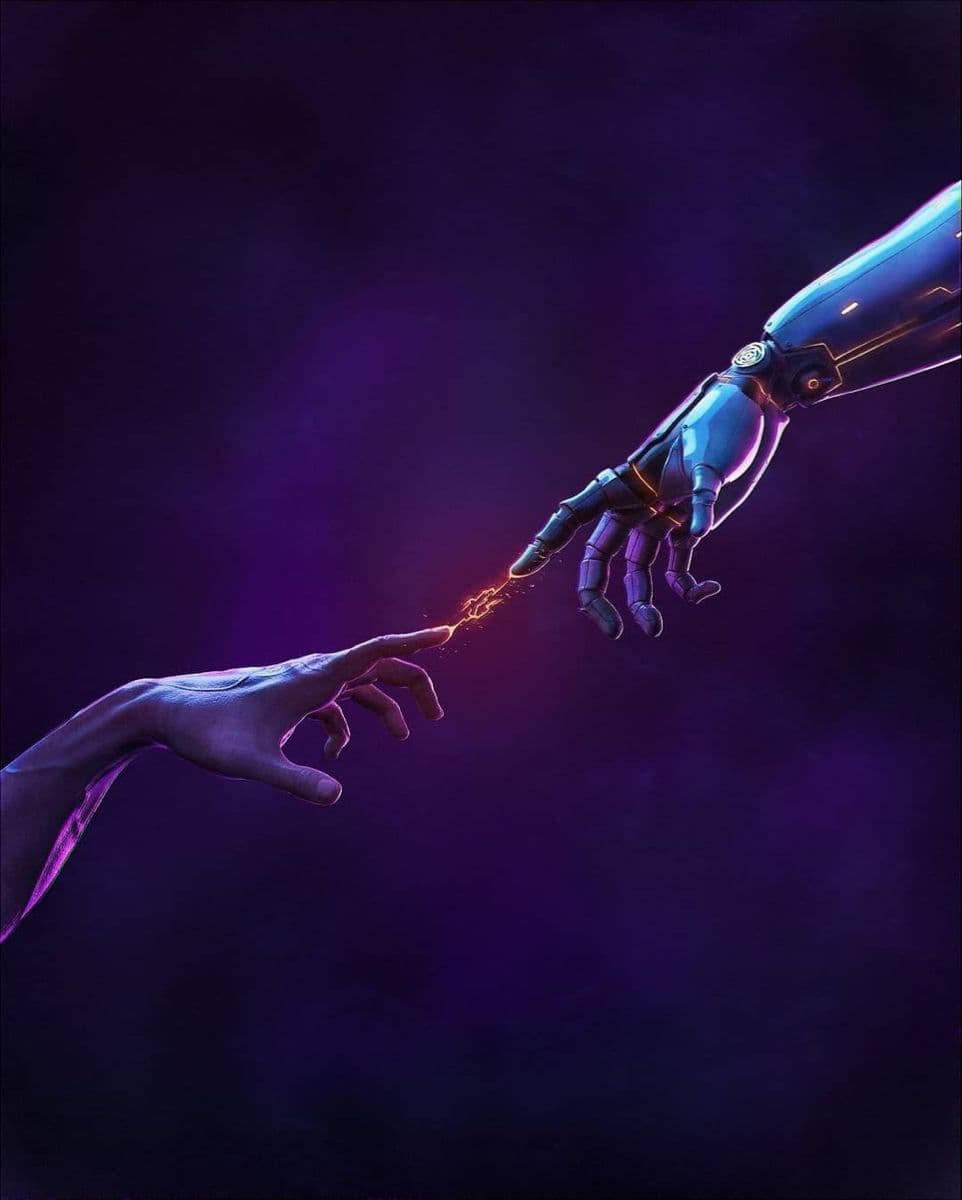
We stand at an inflection point. The question isn't whether robots will transform civilization — they already are. The real question is: what kind of robots do we build, and what does that say about what we value? This isn't merely an engineering problem. It's a design problem. A philosophical problem. A question about the kind of future we choose to create. (For the broader survey of where the field is heading, see The Future of Robotics; this piece is about the three waves and the choices inside them.)
The Three Waves of Robotics
We're living through the early chapters of three simultaneous revolutions. Each will reshape what it means to be human in the world.
Wave One: Industrial Precision
The first wave is nearly complete. Robots in factories, warehouses, and logistics networks have already liberated humans from repetitive, dangerous work. A collaborative robot on a manufacturing line isn't replacing the worker — it's amplifying their capability, handling the 80,000 identical welds while a human handles the 20,000 novel problems that require judgment.
This wave taught us something crucial: automation is most powerful when paired with human ingenuity, not when it replaces it. The question for wave two is whether we can scale this principle to the physical world at large.
Wave Two: Embodied Intelligence
We're entering it now. Mobile robots that can navigate unstructured environments, learn from demonstration, and adapt to novel tasks. Think of a robot that learns to pack boxes by watching a human do it once, or one that can operate in a disaster zone where the layout is unknown and unstable.
This is where artificial intelligence finally meets the physical world in a meaningful way. A language model running on a server is impressive. A robot that understands language, perceives its environment in real time, and takes coordinated physical action? That's the beginning of something genuinely transformative.
The challenge is sample efficiency. Humans learn to be handy in a few years. Current robots need millions of simulated interactions. The future belongs to whoever solves this problem — whoever builds robots that learn as naturally as we do.
Wave Three: Symbiosis
Here's where it gets interesting — and unsettling. The third wave is the merger of biological and mechanical systems. Soft robots that can operate inside the human body. Neural interfaces that let minds control robotic limbs with the same fluidity as biological ones. Exoskeletons that don't just augment strength, but integrate with your nervous system to become an extension of your intention.
This isn't science fiction. Today in 2026, we have the first clinical trials. The first paralyzed patients are controlling robotic arms with neural implants — not with the latency of conscious thought, but with the immediacy of reflex. They're not operating the arm; the arm is part of them.
When this technology becomes broadly available — when it's as normal to have a neural interface as it is to wear glasses — the question shifts from "What can robots do?" to "What will humans become?"
The Design Philosophy That Matters
Most discussions about robots focus on capability: speed, strength, precision, sensor resolution. These matter, but they're not what will determine whether robotics becomes liberating or oppressive.
What matters is intent embedded in design. Every robot embodies a set of values in its architecture. A robot designed to maximize output per dollar will make different choices than one designed to maximize human agency. A system built to surveil will look different than one built to augment.
Principles for Robot Design in a Human-Centered Future
Transparency. A robot's decision-making process should be legible to the humans it affects. If a robot denies access, rejects work, or allocates resources, you should understand why. This isn't always possible — deep learning is inherently opaque — but it should be the target, the ideal to pursue.
Reversibility. Robots should augment human agency, not replace it. The human should always have the ability to override, redirect, or shut down the robot. The moment a system becomes irreversible — the moment we can't undo what the robot has done — we've crossed a line.
Redundancy with depth. Don't trust a single robot, a single AI system, or a single point of failure. But also don't build systems so distributed that no one understands them. Build in depth and understanding alongside redundancy.
Purpose alignment. A robot built for care looks different than one built for commerce looks different than one built for exploration. The purpose should shape the architecture, not the other way around. Don't retrofit a care robot from a combat-grade chassis.
What We Owe to the Builders
The engineers designing these systems right now are facing an impossible task: build something powerful enough to be useful, but safe enough to trust. Build something that learns and adapts, but predictable enough to certify. Build something that's accessible and democratic, but economically viable.
We owe them honesty about the trade-offs. We owe them time to get it right rather than pressure to move fast. We owe them the intellectual and moral support to say "no, this approach is too risky" when necessary.
And we owe ourselves the willingness to ask hard questions: just because we can build it, should we?
The Economic Disruption We're Not Ready For
The economic impact of advanced robotics will dwarf every previous automation wave. This isn't a recession or a sector shift. This is a civilizational reorganization that reaches deep into the future of work.
When humanoid robots can do any task a human can do — manufacturing, construction, service, care, content creation — what's the economic value of human labor? The honest answer is: we don't know. We've never been here before.
Three Possible Futures
Abundance without agency. Robots produce everything cheaply, but wealth concentrates in the hands of those who own the robots. Most humans become economically superfluous, surviving on basic income but with no genuine agency or purpose. This is the dystopian path.
Distributed capability. The tools of robotics become cheap and accessible enough that many people can own and operate robots. Economic power stays distributed. This requires deliberate policy choices about IP, manufacturing, and access.
A human-machine economy. New economic models emerge that we can't yet predict. Just as smartphones created economic categories that didn't exist in 2007 (app developers, creators, and more), robots will create new roles and value propositions that don't yet exist.
The default trajectory is toward scenario one. Getting to two or three requires vision, policy, and unwavering commitment to a different kind of future.
The Next Decade: Where Decisions Get Made
The next 10 years will determine the trajectory. Not the technical trajectory — that's mostly set — but the social, economic, and political trajectory. Right now, decisions are being made about:
Regulatory frameworks. Will robots be treated like tools (no liability cap) or like agents (capped liability)? How do we certify them as safe?
IP and access. Will the designs be open or proprietary? Can a small organization build and deploy robots, or is it only for tech giants?
Labor and economics. How do we restructure education, employment, and social support as robots handle more of the work that defines the future of work?
Human identity. As we merge with robotic systems, what does it mean to be human? How do we navigate the cultural, religious, and philosophical questions this raises?
These aren't technical questions. They're questions for everyone — for philosophers, ethicists, policymakers, workers, families, communities. The robot future won't be determined by how clever the engineers are. It'll be determined by how wise we are in governing them.
There's a moment in the opening of Avatar where the protagonist first sees Pandora — a world of impossible beauty and complexity. He's there as a soldier, trained for conquest. But something shifts. He begins to see the world not as a resource to extract, but as a living system to understand and respect.
That's where we are with robotics. We have the capability to create systems of extraordinary power. The question is whether we have the wisdom to approach them with wonder rather than domination, to build in service of flourishing rather than efficiency.
The robots are coming. The only real choice we have left is what we choose to do with them.
The Bottom Line
The robot revolution isn't about machines — it's about choices. We can build systems that amplify human capability or that replace it. We can concentrate wealth with robot owners or distribute robotic tools across society. We can create jobs that didn't exist before or eliminate entire classes of work.
None of these outcomes is determined. The technology is neutral. The direction is ours to choose. The engineers have built the tools. Now it's up to the rest of us — policymakers, business leaders, workers, philosophers, citizens — to decide what we build them for. That's the real future of robots. Not the machines themselves, but the wisdom we bring to how we deploy them.
Explore Related Concepts
Frequently Asked Questions
What are the three waves of robotics?
Wave one is industrial automation—robots already liberate humans from dangerous factory work. Wave two is embodied AI—mobile robots learning from demonstration and adapting to novel tasks. Wave three is symbiosis—merging biological and mechanical systems via neural interfaces and exoskeletons. We are currently transitioning between waves one and two; wave three is beginning.
Why do robots struggle with real-world tasks?
Because real environments are unstructured. Robots trained in controlled settings fail when facing novel scenarios. Current solutions require massive datasets and simulation. The breakthrough will come when robots learn as efficiently as humans—from a handful of demonstrations.
Will robots replace all human workers?
Not necessarily. Robots can do most physical tasks humans do, but whether they will is an economic and political question, not a technical one. Without deliberate policy, wealth concentrates and workers become superfluous. With open-source robotics, distributed manufacturing, and basic income, robots could amplify human capability instead.
What is human-machine symbiosis?
Merging human and machine: neural interfaces letting minds control robotic limbs naturally, exoskeletons integrating with nervous systems, soft robots operating inside the body. First clinical trials are happening in 2026. When this becomes normal, the question shifts from what robots can do to what humans will become.
How should robots be designed to benefit everyone?
Four principles matter: transparency (decision-making legible to affected humans), reversibility (humans always have override), redundancy with depth (no single point of failure), and purpose alignment (design matches intended role). These are design choices, not technical constraints.