US Troops Leave Iraq: Geopolitical Impact of the Military Exit
After 23 years of physical footprint in Iraq, the final U.S. military exit marks a decisive transition from counter-insurgency doctrine to algorithmic deterrence and autonomous defense networks.
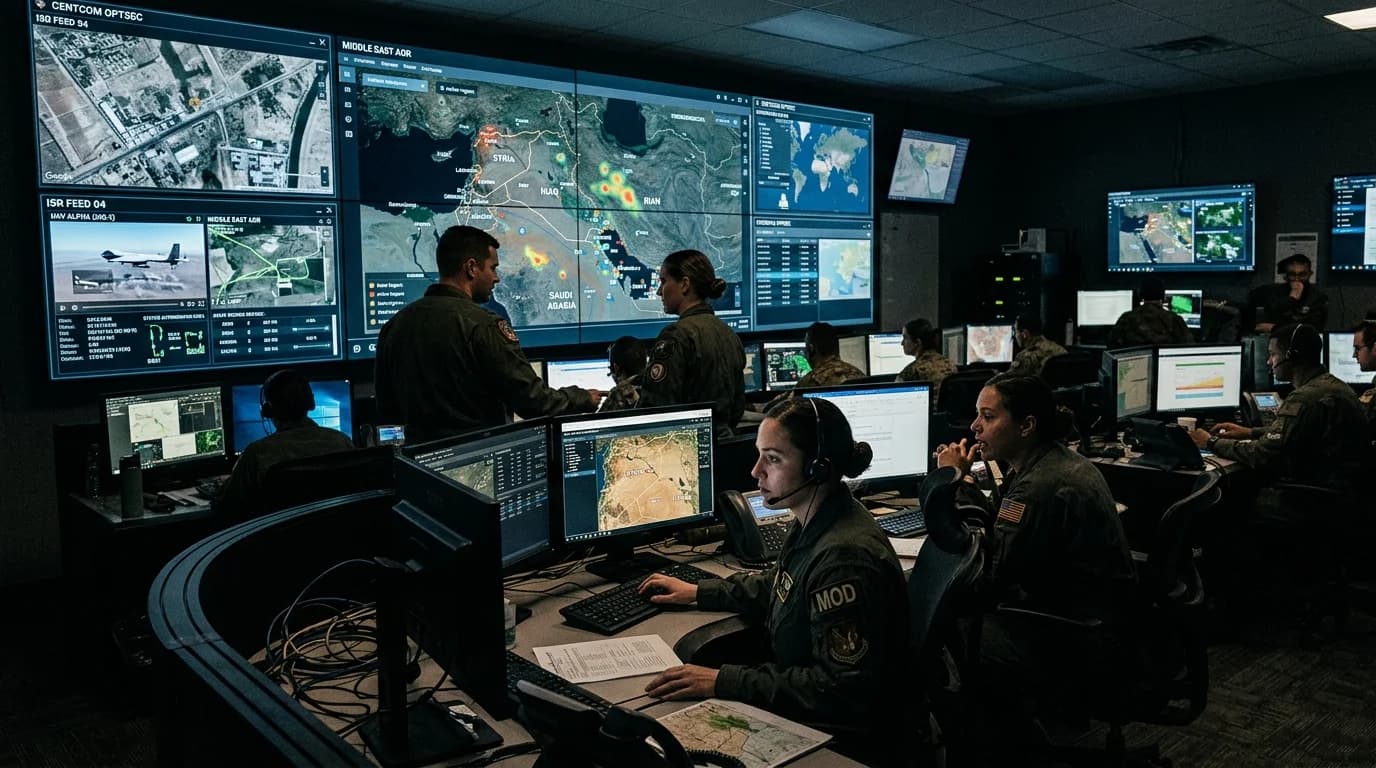
The formal conclusion of the United States military presence in Iraq terminates an operational campaign that spanned more than 23 years, billions of dollars in logistical maintenance, and the direct engagement of hundreds of thousands of service members. Conducted without public fanfare through a measured protocol ceremony in Baghdad, the departure represents far more than an administrative turnover of base infrastructure to the Iraqi Armed Forces. It signals a structural realignment in international defense strategy: the systemic shift away from static forward ground deployments in favor of remote surveillance grids, robotics, and sovereign AI automation.
By extracting the remaining physical garrisons from Iraqi soil, defense planners eliminate the primary stationary target that has drawn asymmetric proxy strikes for over two decades. Yet the absence of American personnel simultaneously creates an operational vacuum across the Fertile Crescent. How Baghdad secures its airspace, how regional state actors recalibrate their strategic depth, and how the Pentagon replaces physical boots with algorithmic monitoring will define Middle Eastern geopolitics for the next decade.
AI Overview
The complete withdrawal of U.S. armed forces from Iraq concludes a military deployment that began in March 2003, transferring full territorial sovereignty to the central government in Baghdad. In response, regional militia factions such as Kata'ib Hezbollah have suspended cross-border offensive operations, shifting their focus toward political consolidation. Concurrently, the Department of Defense is executing a historic doctrinal pivot, channeling defense allocations away from conventional forward bases into autonomous weapons swarms, space-based sensor meshes, and algorithmic command structures centralized under AutoWARCOM.
Key Facts
The transition from conventional ground occupation to algorithmic force projection redefines modern military logistics. The parameters of this transformation are summarized below:
| Dimension | Legacy Operational Baseline | 2026 Post-Withdrawal Posture |
|---|---|---|
| Primary Mission Mandate | Counter-insurgency and advisory support (Combined Joint Task Force – OIR) | Bilateral security partnerships and remote technical advisory |
| Physical Troop Footprint | ~2,500 active-duty personnel across Al-Asad, Erbil, and Union III | Zero permanent combat garrisons; diplomatic security detachment only |
| Command Authority | Conventional multi-echelon regional theater command | Algorithmic task forces integrated with AutoWARCOM |
| Deterrence Mechanism | Forward-deployed airfields, armored patrols, and base interceptors | Distributed uncrewed swarms, orbital reconnaissance, and standoff munitions |
| Primary Regional Friction Point | Direct drone and rocket strikes on American base infrastructure | Covert intelligence competition and domestic political influence |
| Capital Allocation Focus | Base maintenance, troop sustainment, and physical armor | Sensor networks, autonomous drones, and edge semiconductor compute |
Why It Matters
The withdrawal from Iraq represents the definitive closure of the post-9/11 "War on Terror" expeditionary paradigm. For more than twenty years, American defense doctrine prioritized counter-insurgency, counter-terrorism, and large-scale troop rotations in the Middle East. This operational focus came at immense fiscal and strategic expense, tying down critical naval and air assets in stationary defensive postures.
In the current global security environment, static military bases across foreign territories have transformed from strategic assets into operational liabilities. Cheap, mass-manufactured kamikaze drones and precision-guided ballistic missiles have rendered traditional forward operating bases vulnerable to continuous saturation attacks. By removing personnel from fixed installations, the Pentagon insulates its forces from asymmetric attrition while liberating capital for sovereign technological competition.
Simultaneously, the geopolitical ramifications for Baghdad are acute. Iraq must now demonstrate that its internal security apparatus, border patrol units, and federal police can prevent power struggles between competing factions. The departure alters the balance of power across the Levant, opening corridors for regional competitors while compelling neighboring Gulf states to negotiate bilateral security agreements directly with Baghdad.
The Algorithmic Deterrence Model
To understand how modern defense doctrine replaces forward physical garrisons with technology, defense analysts evaluate the Algorithmic Deterrence Model. Under this framework, effective military deterrence is no longer a linear function of physical personnel deployed in a geographic sector. Instead, deterrence capability is governed by three interacting technical variables:
Deterrence Power = (Sensor Persistence × Algorithmic Ingestion Velocity × Standoff Strike Range) / Garrison Vulnerability Index
1. Sensor Persistence
In legacy deployments, situational awareness depended on periodic manned reconnaissance flights and localized patrols. Under the algorithmic deterrence posture, sensor persistence is achieved through overlapping low-Earth-orbit satellite constellations and high-altitude, long-endurance solar drones. These platforms deliver uninterrupted synthetic aperture radar (SAR) and signals intelligence across the entirety of Iraq's borders without requiring personnel in-country.
2. Algorithmic Ingestion Velocity
Sensor collection produces petabytes of unstructured telemetry per hour. The deployment of specialized AI agents allows defense commands to parse radar signatures, thermal deviations, and communication intercepts in sub-second intervals. Automated threat correlation flags anomalous vehicle convoys or arms movements instantly, eliminating the human analyst bottleneck that historically slowed response times.
3. Reduction of the Garrison Vulnerability Index
Static bases require massive logistical supply lines, perimeter defenses, and anti-rocket interceptor batteries (such as C-RAM and Patriot systems). By reducing physical garrisons to zero, the denominator of the equation approaches its baseline minimum, drastically improving the net deterrence calculation.
The 23-Year Pivot: From Counter-Insurgency to Distributed Defense
The trajectory of the American military campaign in Iraq reflects the evolution of modern combat doctrine. Following the 2003 invasion, operations transitioned from conventional force-on-force warfare to protracted counter-insurgency. At its peak in 2007, the deployment exceeded 160,000 service members spread across hundreds of patrol bases and combat outposts.
The subsequent drawdown in 2011 was quickly reversed by the territorial expansion of ISIS in 2014, leading to the formation of Operation Inherent Resolve (CJTF-OIR). For the past decade, American forces operated in an advisory and training capacity, assisting Iraqi security forces and the Kurdish Peshmerga.
However, the nature of threats shifted dramatically over the past five years. As conventional terrorist territorial control collapsed, American installations became targets for sophisticated drone and rocket salvos launched by regional proxy groups. Base defense became an exercise in asymmetric economics: expending multi-million-dollar interceptor missiles to shoot down low-cost loitering munitions costing a few thousand dollars.
Military planners recognized that prolonged physical presence yielded diminishing operational returns while exposing tactical personnel to perpetual risk. The 2026 exit resolves this strategic tension by transitioning the mission into a standard foreign military sales and remote intelligence-sharing partnership.
Regional Security Vacuum and Proxy Dynamics
The immediate aftermath of the U.S. departure has triggered swift tactical adjustments across Iraq's domestic and paramilitary landscape:
- Kata'ib Hezbollah's Strategic Recalibration: Shortly after the final U.S. convoys crossed the border, the leadership of Kata'ib Hezbollah announced an official suspension of combat operations against Western targets within Iraq. While presented as a victory declaration celebrating the end of foreign presence, security analysts interpret this move as a strategic pivot toward political institutionalization. With the unifying target of an American garrison removed, regional militias must now compete within Iraq's political and economic hierarchy.
- Border Surveillance and Smuggling Corridors: The withdrawal leaves critical border regions between Iraq, Syria, and Jordan under the exclusive control of federal Iraqi security units. These corridors have historically served as transit routes for illicit arms and commercial smuggling. Whether Iraqi border guards can maintain surveillance without coalition tactical aerial support remains the critical test of sovereign operational readiness.
- Kurdish Regional Security: The semi-autonomous Kurdistan Regional Government (KRG) in Erbil previously maintained direct tactical integration with American advisory teams. The departure forces Kurdish security authorities to renegotiate security coordination protocols with the central government in Baghdad, testing the constitutional balance of power between federal and regional institutions.
AutoWARCOM and the Autonomous Defense Architecture
The decision to pull boots off the ground in the Middle East cannot be evaluated in isolation. It corresponds directly to a massive domestic defense reorganization: the establishment of AutoWARCOM, a four-star unified command tasked with accelerating autonomous robotic warfare, edge compute integration, and uncrewed combat platforms.
[Defense Capital Reallocation]
           │
           ├─► Decommission Static Outposts & Base Sustainment
           │
           └─► Fund AutoWARCOM Autonomous Systems
                     │
                     ├─► Autonomous Air & Maritime Swarms
                     ├─► Starshield Low-Earth Orbit Constellations
                     └─► Algorithmic Kill-Chain Software Infrastructure
Recognizing that modern conflicts are decided by the velocity of sensor-to-shooter loops rather than mass infantry formations, defense leadership has initiated aggressive structural reforms:
- Streamlining Command Structures: The Pentagon has begun eliminating nearly 20% of legacy general and flag officer positions, redirecting bureaucratic overhead toward specialized technical commands.
- Sovereign Industrial Partnerships: Defense procurement is transitioning away from multi-decade prime contractor hardware programs toward rapid commercial software iterations. Companies specializing in satellite constellations (such as SpaceX's Starshield network), autonomous loitering munitions, and synthetic evaluation platforms are capturing unprecedented shares of defense spending.
- Projecting Power Without Forward Bases: By leveraging autonomous underwater vehicles (AUVs), long-range uncrewed aerial systems (UAS), and sub-orbital communication nodes, modern militaries can project lethal force across the Persian Gulf and Red Sea without maintaining a single permanent runway in Iraq.
Market Analysis
The macroeconomic consequences of the withdrawal reverberate across global energy markets and defense capital allocation. Over the past two decades, the presence of American forces in Iraq served as an implicit insurance policy for international oil infrastructure, underwriting the security of southern export terminals in Basra and regional shipping lanes.
With physical troops gone, global energy conglomerates are re-evaluating risk premiums. While crude production in Iraq remains stable, infrastructure operators are increasing their investments in private corporate security, localized drone defense systems, and automated pipeline monitoring technologies.
Furthermore, within defense equity markets, a decisive rotation is underway. Capital is flowing out of legacy land-warfare vehicle manufacturers and into robotics developers, semiconductor designers, and edge-AI defense contractors. The shift from personnel operational expenditures (OpEx) to autonomous software capital expenditures (CapEx) represents a permanent realignment of sovereign defense budgets.
Core Technologies
The technological infrastructure enabling this strategic exit encompasses three core layers:
- Distributed Satellite Telemetry: Low-latency orbital meshes provide unbroken high-bandwidth data links to remote operating centers thousands of miles away, enabling real-time command and control without local signal towers.
- Autonomous Swarm Robotics: Coordinated formations of autonomous drones operate under decentralized mesh networks, capable of scouting vast desert terrain and engaging hostile assets using onboard edge inference without continuous human piloting.
- Algorithmic Signal Fusion: Centralized intelligence engines ingest multi-spectral optical data, radio frequency emissions, and commercial satellite imagery to generate predictive operational pictures for regional defense partners.
Limitations
Despite the operational efficiency of autonomous deterrence, the strategy introduces distinct strategic and technical risks:
- Electronic Warfare Susceptibility: Algorithmic systems depend on electromagnetic connectivity and GPS telemetry. Advanced electronic warfare, jamming, or cyber attacks can degrade autonomous nodes, creating temporary operational blind spots.
- The Intelligence Deficit: High-altitude sensors cannot fully replace human intelligence (HUMINT) networks developed through decades of direct liaison with local tribal leaders and provincial authorities.
- Escalation Uncertainty: Autonomous response protocols operate at millisecond speeds. Without careful human-in-the-loop safeguards, algorithmic targeting during border incidents risks triggering rapid diplomatic escalation before political leadership can intervene.
Related Articles
Explore related analysis and technical breakdowns across our publication:
- Discover our analysis on multi-robot coordination in Command the Swarm: Natural Language Control for Multi-Robot Systems.
- Examine the physical infrastructure constraints of modern defense compute in Data Center Bottlenecks and AI Capex.
- Read about semiconductor sovereignty and trade policy in Chip Export Controls and Geopolitics.
- Browse all current technology publications on our Technology Hub.
References
Primary sources, research institutes, and policy analyses verified for operational context:
- CSIS Middle East Program: Strategic Regional Transitions — Center for Strategic and International Studies research on security transitions in Iraq.
- CSIS Strategic Technologies Program: Defense Innovation and Autonomy — Analysis of automated systems, AI integration, and defense organizational restructuring.
- RAND Corporation: Middle East Security and Stability — Policy research evaluating regional deterrence and bilateral defense partnerships.
- RAND Corporation: Military Technology and Autonomous Systems — Comprehensive assessments of uncrewed platforms and sensor networks in modern warfare.
- Brookings Institution: Defense & Security Policy — Research on U.S. force posture, military leadership reform, and alliance dynamics.
The Bottom Line
The withdrawal of U.S. forces from Iraq is neither a sudden retreat nor an abandonment of regional interests; it is the execution of a doctrinal transformation designed for twenty-first-century competition. By relinquishing vulnerable forward operating posts and funneling resources into AutoWARCOM and autonomous weapons swarms, the United States has traded static physical vulnerability for distributed algorithmic agility.
For Iraq, the challenge of the coming decade will be proving that national sovereignty can translate into domestic security and political equilibrium. For global observers and defense strategists, the 2026 exit serves as the definitive turning point where the era of prolonged ground occupation gave way to the era of autonomous, algorithmic deterrence.
Explore Related Concepts
Frequently Asked Questions
Why did U.S. troops leave Iraq after 23 years?
The United States concluded its physical military mission under a bilateral security transition roadmap, reflecting a doctrinal pivot from legacy counter-insurgency toward autonomous deterrence and high-technology defense architectures.
What is AutoWARCOM and why was it established?
AutoWARCOM is a specialized unified command created to consolidate algorithmic weapons systems, uncrewed robotic formations, and distributed sensor networks under an integrated autonomous operational umbrella.
How does the withdrawal affect Middle Eastern regional stability?
The departure removes direct tactical friction points between U.S. personnel and local proxies, while simultaneously challenging domestic Iraqi security forces to manage border surveillance and intelligence continuity independently.
Why did Kata'ib Hezbollah announce a suspension of operations?
The group framed the pause around the cessation of the American troop presence, transitioning from active military engagement toward political consolidation and administrative influence within Iraq's domestic apparatus.
How does autonomous warfare replace permanent military bases?
Autonomous warfare substitutes stationary personnel with persistent algorithmic reconnaissance, uncrewed aerial and maritime vehicles, and satellite constellations capable of precision response without forward-deployed ground garrisons.