Humanoid Robots Are Here. The Real Question Is Whether the Math Works
The demos were convincing. The deployments are real. But the unit economics of replacing human workers with walking machines are still being written in real time, and the answers so far are humbling.
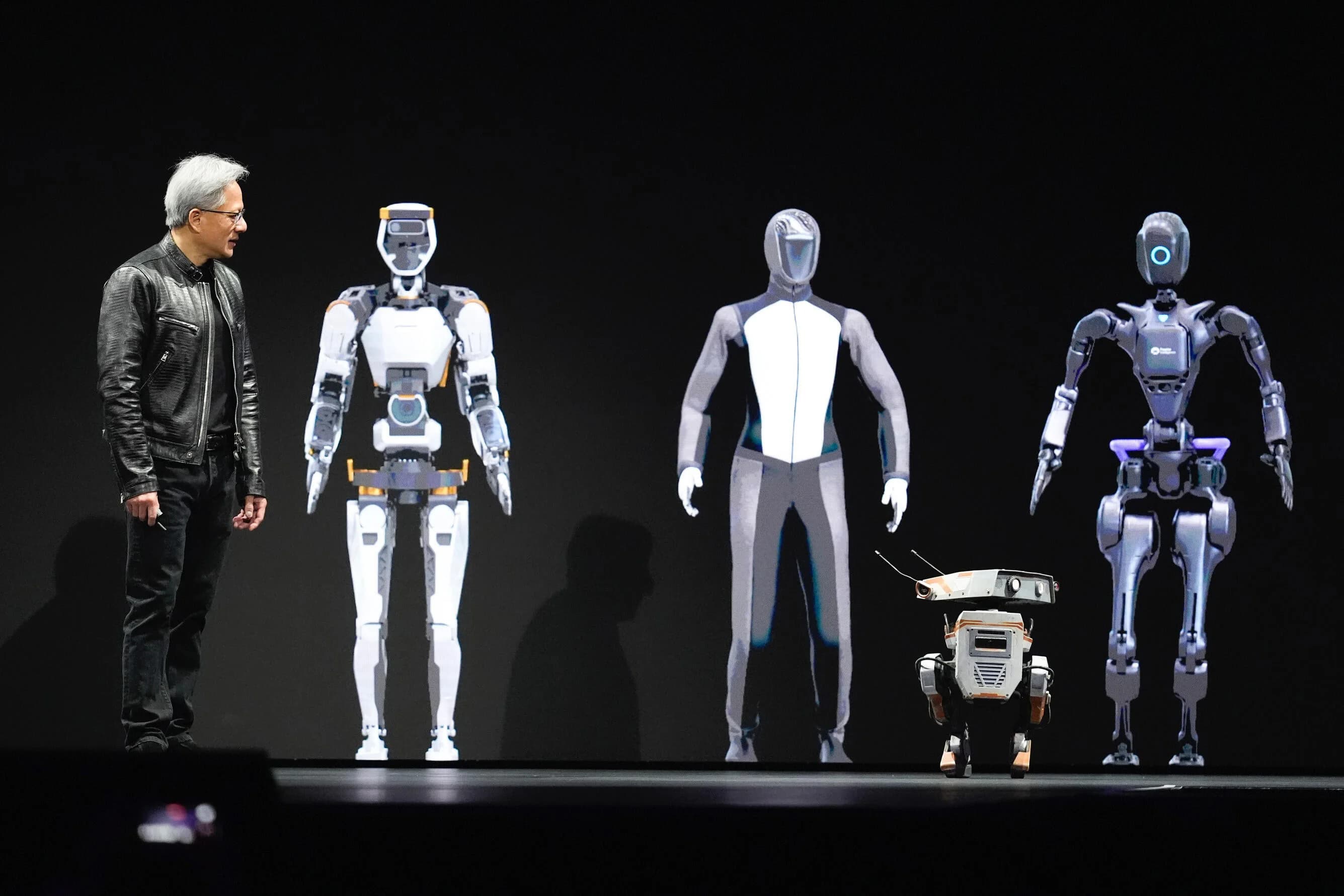
The robots have left the demo videos. In warehouses, automotive plants, and logistics facilities, humanoid machines are now performing real production work — not as prototypes or proof-of-concept installations, but as a first wave of commercial deployments generating actual operational data. The technology has moved faster than most analysts expected. The economics are proving more resistant.
From the Lab to the Factory Floor
What changed between the humanoid robot as a lab curiosity and the humanoid robot as a commercial product was the maturation of foundation models for physical manipulation. The underlying insight — that large-scale training on diverse data could give robots the kind of generalizable grasping and movement that had eluded rule-based systems for decades — came from the same AI research wave that produced large language models. As explored in The Humanoid Renaissance, companies applied this paradigm explicitly to robotic control, and the results compressed what had seemed like a decade of progress into a few years.
The players who moved first to capitalize on this are now running genuine commercial deployments. Figure AI's partnership with BMW in automotive manufacturing has moved beyond pilot phases into sustained production use. Amazon's investment in Agility Robotics' Digit platform is scaling inside fulfillment centers, handling repetitive tote-moving that represents significant labor cost at warehouse scale. Tesla has deployed its Optimus robots into internal factory operations, framing them as a core pillar of the company's long-term business model rather than a side project. None of these deployments are yet at the scale that would reshape labor market statistics. All of them are generating operational data that could redefine what is possible over the coming years.
The Unit Economics Model
Every compelling robotics pitch deck arrives with the same chart: robot cost per year divided by human worker cost per year, with a crossover point where the machine becomes cheaper. The math is straightforward. The assumptions behind it are not.
The all-in cost of deploying a humanoid robot is substantially higher than the hardware sticker price suggests. Facilities must be adapted, sometimes significantly. Software integration requires sustained engineering effort. Maintenance and downtime create a reliability floor that early commercial units frequently struggle to meet. And the human worker cost comparator needs to be fully loaded — wages, benefits, management overhead, and turnover — to make the comparison honest. When those numbers are stacked correctly, current-generation humanoid robots justify themselves only in a narrow band of high-wage, high-frequency, repetitive roles where human turnover is also costly. That band is real. It is also narrower than most pitch decks imply.
The trajectory matters more than the current snapshot. Actuator costs, battery density, and sensor costs are all on improvement curves driven by automotive and consumer electronics production volumes. The humanoid robot that costs several hundred thousand dollars to deploy today has a credible path to dramatically lower costs over the next several years, driven by the same forces that made electric vehicles commercially viable. The question for investors and deployers is not whether costs will fall but how fast, and what the intermediate period costs those who bet early.
What the Machines Can — and Cannot — Do
The honest accounting of current humanoid capability separates into two columns that every deployer has had to reconcile for themselves. In one column sit structured pick-and-place tasks in predictable environments, inventory movement on flat surfaces, repetitive assembly steps where object position is controlled, and bipedal navigation through human-designed spaces. These robots are genuinely useful for these tasks, and the use case is economically real. In the other column sits anything involving the long tail of physical variation.
Human hands are extraordinarily capable instruments, shaped by evolutionary pressure to handle objects of vastly different sizes, weights, textures, and orientations without conscious thought. A warehouse worker picks items ranging from padded envelopes to heavy awkward boxes without pausing to recalibrate. A current-generation humanoid robot handles the median object in its training distribution reasonably well and struggles with outliers — items that are unusually shaped, unexpectedly heavy, or positioned outside the expected range. The gap between "works on the demo set" and "works on the full distribution of tasks in a live facility" is where most commercial robot deployments are spending the bulk of their engineering budgets right now.
This is not a reason to dismiss the technology. It is a reason to be precise about where it creates genuine value. The deployments that are actually working are the ones that have narrowed scope aggressively — identified the specific, repetitive, high-volume tasks that robots handle well and structured the environment to match. That kind of focused deployment is less glamorous than general-purpose robot labor, but it is what generates actual return on investment today.
The Software Value Capture Problem
The hardware story is the visible one, but the more consequential economic question is who ultimately captures value in a world of broadly deployed humanoid robots. The history of technology platforms suggests the answer may not be the companies building the physical machines.
Semiconductors enabled personal computing, but chip manufacturers captured a fraction of the value that software platforms captured. Smartphones required sophisticated hardware, but the long-run economics settled in operating systems and applications. Humanoid robots require defensible actuators, batteries, and sensors — all of which carry component-level moats. But the layer that determines what a robot can do, and how well it generalizes to new tasks, is the foundation model for physical intelligence. That software layer is where the economic moats in robotics may ultimately be thickest. The manufacturer that locks in the best robot foundation model — the one that generalizes best across tasks with the least task-specific retraining — will have a durable competitive position even if its hardware is eventually commoditized by lower-cost competitors.
Investment Thesis
For venture capital and growth investors evaluating the robotics space, the current moment calls for precision about which part of the stack you are betting on. Robot manufacturers are taking on enormous capital expenditure risk, long development timelines, and the operational complexity of being simultaneously a hardware company and a software company. Component suppliers — particularly those with defensible positions in actuators, tactile sensors, and battery management — may have a more predictable return profile, though their growth ceiling is capped by the market's overall adoption pace.
The platform bet is on software: foundation models for robotic control, simulation environments for training, and fleet deployment and monitoring infrastructure. These businesses scale without the per-unit capital intensity of hardware manufacturing, and they benefit from data network effects as deployed robots generate proprietary training data from real-world operation. The investing case for robotics software resembles the case for cloud infrastructure in the 2010s — a bet that the enabling layer captures disproportionate margin as hardware commoditizes below it. The parallel case in autonomous vehicles — where robotaxi economics are similarly proving that software and data compound faster than hardware alone — illustrates the pattern.
The Labor Market Reality
The labor displacement conversation around humanoid robots oscillates between panic and dismissal, and the honest position is somewhere more nuanced than either pole. The jobs most immediately at risk are the highest-frequency, lowest-cognitive-complexity manual tasks in structured environments: warehouse picking, inventory movement, specific automotive assembly steps. These are real jobs held by workers who are among the less economically mobile cohorts in the future of work. When displacement comes, it will not be distributed evenly across skill levels or geographies.
At the same time, the timeline is long enough that policy responses, retraining investments, and labor market adaptation have meaningful runway. Current deployment rates suggest that the humanoid robots reaching commercial scale over the next several years will absorb roles at the margin rather than rewrite employment statistics overnight. The more important near-term dynamic may be wage pressure — employers using the credible threat of robot deployment as leverage in compensation negotiations — rather than direct displacement at scale. That dynamic is subtler, harder to measure in official statistics, and already visible in certain sectors.
What Separates Real Deployments from Vaporware
After several years of impressive demonstrations, the field is sorting itself into companies with genuine production deployments and companies still running carefully curated demos. The distinguishing markers are operational longevity — robots that have run for thousands of hours in real production environments — transparent uptime rates, and task completion rates measured against the full distribution of objects in a live facility rather than a controlled subset. The companies moving fastest are also the ones most willing to describe their current limitations precisely, because that precision is what allows them to scope deployments that actually work, and what builds the operational credibility that enterprise customers require before committing to scale.
The field has matured past the point where a compelling video constitutes a serious technology claim. Investors, enterprise customers, and analysts are asking harder questions, and those questions are beginning to separate companies building durable businesses from those subsisting on narrative.
Risks
The most material near-term risk is the implementation gap: enterprise customers who move too fast, scope deployments too broadly, and absorb the full cost of robots that are not yet ready for their environment. Hardware reliability in real industrial conditions differs substantially from controlled demonstrations, and a single high-profile deployment failure at a major brand could dampen enterprise appetite for a year or more. There is also a geopolitical dimension — semiconductor export controls and supply chain fragmentation directly affect the actuator and sensor components that humanoid robots require, adding cost and timeline uncertainty to programs that are already capital-intensive.
The longer-horizon risk is that the foundation model advantage accrues to a small number of AI incumbents rather than to the robot hardware companies that have raised the most capital. If the intelligence layer commoditizes the hardware — the way Android commoditized smartphone hardware below a certain price point — then the valuations currently assigned to humanoid robot manufacturers may need significant revision. Investors who have underwritten both layers in the same portfolio should stress-test that assumption.
The Bottom Line
Humanoid robots are real, deployed, and generating genuine economic value in specific applications. The technology has moved from science fiction to commercial reality faster than almost anyone outside the field predicted, and the deployments now running in automotive and logistics facilities are producing the kind of operational data that will drive the next generation of capability improvements. But the unit economics remain narrow, the capability gaps in dexterous manipulation are large, and the path to broad labor market impact runs through a series of unsolved engineering and business problems that are being worked in parallel.
The companies that will matter in this space over the next decade are not necessarily the ones with the most impressive demos today. They are the ones that understand precisely which tasks their robots can reliably perform, deploy into those tasks with operational discipline, compound improvement through real-world data, and build the software layer that makes their machines smarter over time. That combination — disciplined scope plus compounding learning — is the winning formula in most technology transitions. In humanoid robotics, it remains to be demonstrated at the scale that changes the broader economic picture.
Sources
- Figure AI — commercial humanoid robot deployments and BMW partnership
- Agility Robotics — Digit platform for warehouse automation
- Tesla Optimus — Tesla's humanoid robot program and factory deployment updates
Related
Explore Related Concepts
Frequently Asked Questions
Are humanoid robots actually being deployed in real factories in 2026?
Yes. Companies including BMW, Amazon, and Tesla have humanoid robots performing specific tasks in real production environments. These are not pilots in a narrow technical sense — they are commercial deployments generating real operational data. Scope remains narrow and controlled, but the technology is no longer confined to demonstration settings.
How much does a humanoid robot cost today?
Current-generation commercial humanoid robots carry significant six-figure price tags per unit, substantially higher than the annualized cost of the human workers they might displace. Manufacturers are targeting rapid cost reduction, but the economics today only pencil out for specific high-frequency, labor-intensive roles at meaningful deployment scale.
What tasks can humanoid robots reliably handle today?
Moving inventory in structured environments, picking and placing objects within a defined object class, and executing repetitive assembly steps in controlled conditions. Complex dexterous manipulation — handling the full variety of irregular objects at human speed and accuracy — remains a hard unsolved problem that limits deployment scope.
Who profits most from the humanoid robot buildout?
Potentially: robot manufacturers with defensible hardware designs, component suppliers with moats in actuators and sensors, and the foundation model companies providing the software intelligence layer. Enterprise deployers take on the highest implementation risk and may capture less margin than the enabling infrastructure.
Will humanoid robots cause mass unemployment in the near term?
Not in the near term. Current deployment scope is narrow, costs are high, and widespread adoption requires substantial workplace adaptation. The more realistic near-term scenario is targeted displacement in specific high-volume, repetitive roles — not broad workforce substitution.